Affiliate Disclosure:This article contains affiliate links. If you purchase through our links, we may earn a small commission at no extra cost to you. We only recommend gear we've tested or would genuinely use ourselves.
buying guide • May 11, 2026 • 12 min read · The Bite Intel Team
Kayak Fishing Net Buying Guide: How to Choose the Right Landing Net
Mesh type, hoop size, handle length, and buoyancy — what actually matters when choosing a kayak fishing net, with recommendations by fishing situation.
Most generic landing net advice is written for bank anglers or boat fishermen. Those readers have room to maneuver, standing room, and a wall rack to hang a net on. Kayak anglers don't. You're sitting low, your deck space is measured in inches, and if you drop the net overboard, it either floats or it's gone.
This guide covers the five decisions that actually matter when choosing a kayak fishing net — plus honest assessments of which nets fit which situations. If you're still figuring out what you need, this is where to start.
The Five Decisions That Matter
1. Mesh Type: Rubber vs. Nylon Monofilament
This is the single most important decision, and the answer for fishing is almost always rubber.
Nylon monofilament mesh (traditional knotted or knotless nylon) is lighter and cheaper. It also snags hooks constantly. If you're fishing anything with treble hooks — crankbaits, jerkbaits, topwater — you will spend minutes untangling hooks from mono mesh after every net job. A gut-hooked fish is worse. On a kayak where you're managing the fish, the paddle, and your balance simultaneously, untangling a mesh net is a real problem.
Rubber-coated mesh costs more and weighs more, but hooks slide off rather than catching. It's also gentler on fish — nylon strips protective slime coating, which matters if you're practicing catch and release. Rubber dries faster too, so you're not hauling a waterlogged net for the rest of the trip.
The exception: if you exclusively target trout with barbless single hooks, nylon is fine and the weight savings matter on long hikes to water.
Tip
Check the mesh description carefully. "Coated" or "rubber mesh" is what you want. "Knotless" without a rubber coating is still nylon — knotless just means it's gentler than knotted nylon, not that hooks won't catch.
2. Hoop Size and Shape
Hoop size should match your primary target species, with one kayak-specific caveat: larger hoops mean more deck space taken up and a heavier net.
By species:
- Panfish, trout under 18": 12"–15" round hoop
- Bass, walleye, inshore species (redfish, flounder, speckled trout): 18"–21" teardrop or round
- Pike, musky, larger stripers: 24"+ round — and you should know going in that a net this size is awkward on most kayaks
Teardrop vs. round: Teardrop hoops have a narrowed leading edge, which makes sliding the net under a fish easier. They also fold more compactly than round hoops of the same diameter because the flat side lies flatter against the handle. For kayak fishing, teardrop is the more practical shape.
If you primarily fish one species but occasionally land something bigger, size for your typical fish. A slightly too-small net for an occasional large fish is manageable. A permanently oversized net that crowds your deck every trip is a constant annoyance.
3. Handle Type: Folding vs. Telescoping vs. Fixed
This matters more on a kayak than anywhere else because deck real estate is limited.
Fixed handles are the simplest and lightest — nothing to break or malfunction. A 36" fixed-handle net needs 36" of deck space, which is often more than a kayak has to give.
Folding (hinged) handles collapse the handle in half at a hinge joint. A 36" handle becomes 18". The click-lock mechanism holds it rigid when open and flat when closed. This is the most common design in kayak fishing nets because it solves the storage problem without adding much cost or weight. The hinge adds a potential failure point, but quality hinges on nets from Frabill and similar brands hold up for years of regular use.
Telescoping handles extend from a compact collapsed length to full reach. The most versatile option — you can fish with 24" of handle on a flat-water lake and extend to 36" when you need more reach in moving water. The trade-off is weight and cost.
For most kayak anglers, a folding handle in the 24"–30" range is the right starting point.
4. Buoyancy: Does It Float?
This is kayak-specific and often overlooked when buying from generic fishing gear lists.
A dropped net on a bank trip falls to the ground. A dropped net from a kayak either floats back up or sinks to the bottom. In shallow water you might retrieve it. In anything deeper, it's gone — and the net is the one piece of gear you're holding in your hand, over the water, while managing a fish.
Floating handles typically use EVA foam cores. Some nets have buoyant foam built into the frame as well. Look specifically for "floating" in the product description; not all nets float, and many listings don't make this clear.
If you use a net leash clipped to your PFD or rigging, a non-floating net is more acceptable — though still not ideal in fast water where a sinking handle can pull against the leash and complicate things.
Warning
Don't assume a handle is buoyant because it looks like foam or fiberglass. Test it in shallow water before trusting it on a deeper trip. Some handles float barely horizontal — enough in calm water but not in any current.
5. Attachment and Storage on a Kayak
A landing net you can't quickly access when a fish is on is a problem. Most kayak anglers solve this one of two ways:
Magnetic quick-release: A strong magnet pad on the net handle attaches to a magnet clip on your PFD or chest harness. When the fish is on, you pull the net free with one hand. This is the cleanest solution — hands-free storage, instant access. Magnets need to be rated for the net weight; heavier nets need stronger magnets. Magnet clips from YakAttack handle most net weights.
Bungee or clip storage on deck: The net slides under rear bungees or clips to a carabiner on your rigging. Slightly slower to deploy than a magnetic release, but no extra equipment needed.
Regardless of storage method, add a short retractable leash from the net handle to your kayak or PFD. Cheap insurance against losing it overboard entirely.
What to Avoid
Nylon mono mesh with treble hooks. If your tackle box has crankbaits, don't buy a nylon mesh net. Size for the fish you actually catch most, not the largest fish you've ever landed.
Overbuilding for your species. A 24" musky net on a 10-foot SOT kayak fishing panfish is just dead weight and an obstacle every trip.
Generic listings without specs. "Fishing net" listings without hoop size, mesh type, or handle material described are exactly the kind of net that looks fine in the Amazon photo and disappoints in use. Stick to brand-name products from Frabill, EGO, KastKing, or similar where specs are clearly listed.
Products Worth Considering
These aren't ranked — each fits a different situation. The recommendation table at the bottom maps them to use cases.
| Product | Rating | Price | Best For | Link |
|---|---|---|---|---|
| Frabill Power Stow 20" | 4.6/5 | $$ | All-around kayak net | Check Price |
| EGO S2 Slider 18" | 4.5/5 | $$$ | Telescoping reach, premium build | Check Price |
| KastKing Madbite Rubber Net | 4.4/5 | $ | Budget rubber mesh | Check Price |
| Plusinno Floating Landing Net | 4.3/5 | $ | Buoyancy on a budget | Check Price |
| Ranger by Promar Floating Net | 4.2/5 | $ | No-frills float and fold | Check Price |
| YakAttack Leverage Landing Net | 4.5/5 | $$$ | Kayak-native magnetic mount | Check Price |
Frabill Power Stow 20" — Rubber-coated mesh, 20" teardrop hoop, folding handle. The most consistently recommended kayak landing net for bass and inshore species. The hinge mechanism is solid, the rubber mesh handles treble hooks cleanly, and the 20" teardrop is the right size for most freshwater and light inshore fishing.
Check Price on AmazonEGO S2 Slider 18" — Telescoping aluminum handle (18"–36"), rubber-coated mesh, 18" round hoop. The premium option. You pay for the telescoping mechanism and a build quality that holds up to saltwater use. Worth the price if you fish multiple types of water or want one net that adapts to different situations long-term.
Check Price on AmazonKastKing Madbite Rubber Mesh Net — Folding handle, rubber mesh, 18" hoop. The budget rubber-mesh option. The hinge is lighter-duty than Frabill's but holds up for typical use. For anglers who need rubber mesh without spending $35–40.
Check Price on AmazonPlusinno Floating Landing Net — EVA foam handle (floats), rubber mesh, folding. The pick if buoyancy is your primary concern on a budget. Build quality is lighter-duty than Frabill, but the floating handle is a real feature and the rubber mesh is serviceable for most freshwater fishing.
Check Price on AmazonYakAttack Leverage Landing Net — Designed specifically for kayak fishing, with a built-in magnetic mount system and extended reach for netting from a seated position. Solves the attachment problem out of the box. Expensive, but you're not buying a separate magnetic release system on top of it.
Check Price on AmazonRigging Your Net on a Kayak
Getting the net accessible matters as much as which net you buy.
Magnetic release setup: Mount a magnet pad to your PFD shoulder strap. Attach a corresponding magnet to the net handle. The net hangs at chest level, releases with one pull. Keep the magnet weight-rated for your net — a heavy net with a weak magnet will release on its own from paddle vibration.
Deck bungee storage: Slide the folded net under stern bungee cords. Keeps it flat and out of the way but requires two hands to retrieve — fine for calmer sessions where you're not managing fast-moving fish.
Leash it regardless. Whether you use magnetic release or deck storage, attach a short retractable leash from the net to your kayak or PFD. If the net goes over the side, the leash keeps it recoverable.
Tip
Practice deploying your net before you're on the water with a fish on. The time to figure out the magnetic release or the bungee grab is during a dry run on dry land — not when a 4-pound bass is running toward your hull.
FAQ
Do I need a net specifically designed for kayak fishing, or will any landing net work?
Any net technically works, but kayak constraints — limited deck space, low seated position, drop risk — push you toward folding handles and floating materials. A bank-fishing net with a fixed 5-foot handle is unwieldy on a kayak. Shopping specifically for "kayak fishing net" features (folding, floating, magnetic-compatible) gets you to the right products faster than shopping generically.
What hoop size should I start with if I fish multiple species?
An 18"–20" teardrop hoop covers most mixed freshwater situations. It handles bass and walleye comfortably and isn't oversized for smaller species that don't need netting anyway. For primarily saltwater fishing, go 20"–21" to handle redfish and flounder.
Is a $25 net really that different from a $70 net?
On specific points, yes. The main differences: hinge durability, mesh quality, and handle construction. Budget nets often have hinges that loosen over time or thinner mesh than advertised. For a net you're using every week through a full season, spending $35–45 on a Frabill is worth it. For occasional use, a KastKing or Plusinno is fine.
Can I use a net leash instead of worrying about whether it floats?
Yes. A retractable leash clipped to the net eliminates the drop-and-lose problem regardless of buoyancy. If you're going to leash the net anyway, buoyancy becomes less critical — though a floating handle is still easier to retrieve if the leash lets it sink a foot or two before catching.
What's the best way to clean a rubber mesh net?
Rinse with fresh water after every saltwater trip. For a deeper clean, mild soap and a soft brush clears slime and debris. Rinse thoroughly — soap residue can harm released fish. Let it dry in the shade; UV exposure degrades rubber mesh faster than the handle material.
My kayak has a rod holder on the rail — can I store the net there?
You can, but it rattles and is slow to deploy. Some anglers use oversized rod holders or dedicated net holsters on a track-mount system (RAM or YakAttack). The magnetic-to-PFD approach is almost always faster and more practical than trying to mount the net on the kayak itself.
Final Recommendation by Situation
| Your Situation | Best Pick | Why |
|---|---|---|
| Mixed freshwater bass/walleye, first net | Frabill Power Stow 20" | Rubber mesh, reliable hinge, right hoop size, proven on kayaks |
| Budget-first, rubber mesh required | KastKing Madbite | Rubber mesh at the lowest price that holds up |
| Buoyancy is the priority, budget matters | Plusinno Floating Net | EVA foam handle floats without spending $60+ |
| Multi-style fishing, want one net long-term | EGO S2 Slider | Telescoping handle adapts to different reach needs |
| Want a kayak-native setup with magnetic mount | YakAttack Leverage Net | Designed for kayak use, magnetic system included |
| Trout only, barbless hooks, light kit | Lightweight nylon mesh (any brand) | Rubber mesh is overkill; save the weight |
The Frabill Power Stow covers most kayak anglers' needs — it's the net you'll see most often on the water because it hits the right combination of features and price. If buoyancy is your main concern and budget is tight, the Plusinno Floating Net solves that specifically without overspending.
Either way, add a leash before your first trip. It's a $5 piece of gear that prevents a $40 net from ending up on the bottom.
About The Bite Intel Team
The Bite Intel Team researches and curates the best kayak fishing gear based on extensive product analysis, angler community feedback, and manufacturer specs.
Related Posts
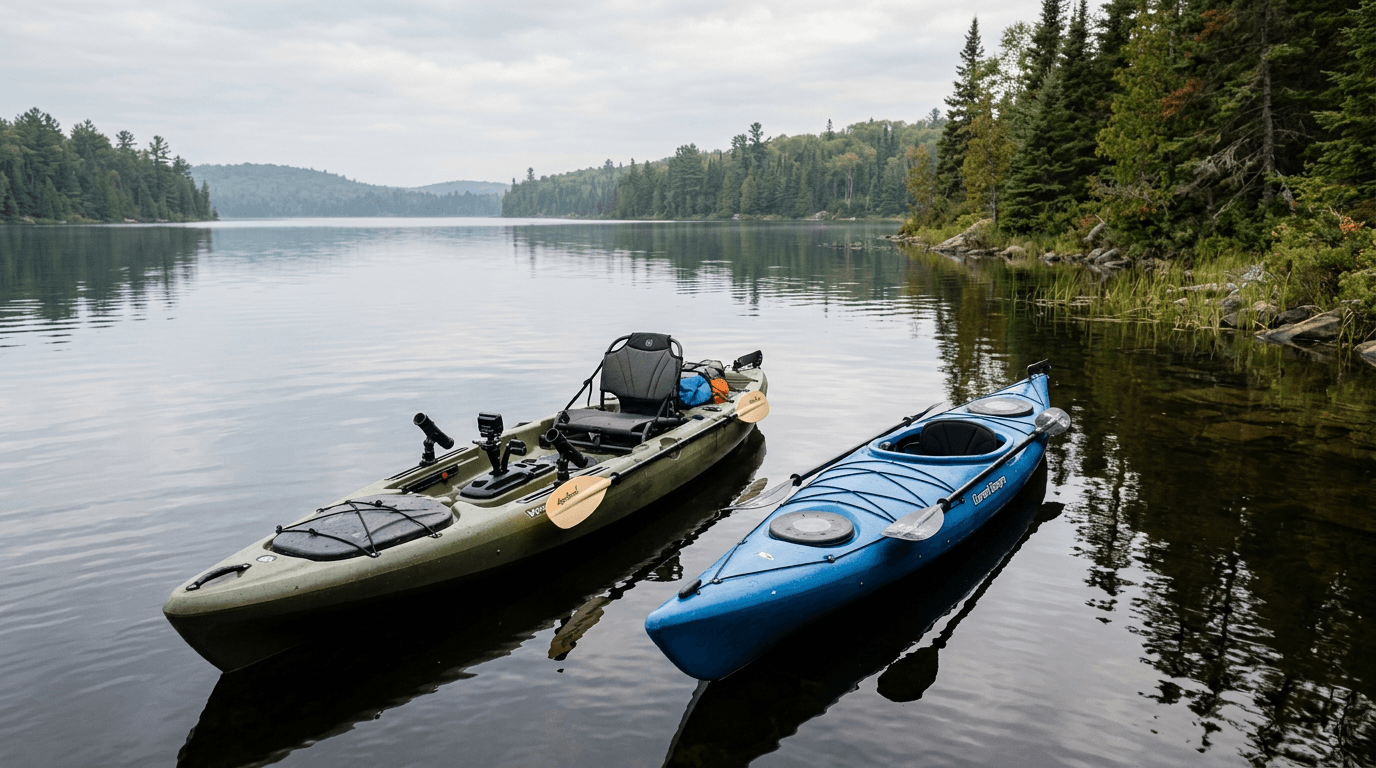
Angler Kayak vs Regular Kayak: 7 Key Differences That Change How You Fish
Angler kayak vs regular kayak — the real functional differences in stability, storage, speed, and cost. Plus whether your regular kayak is worth converting.
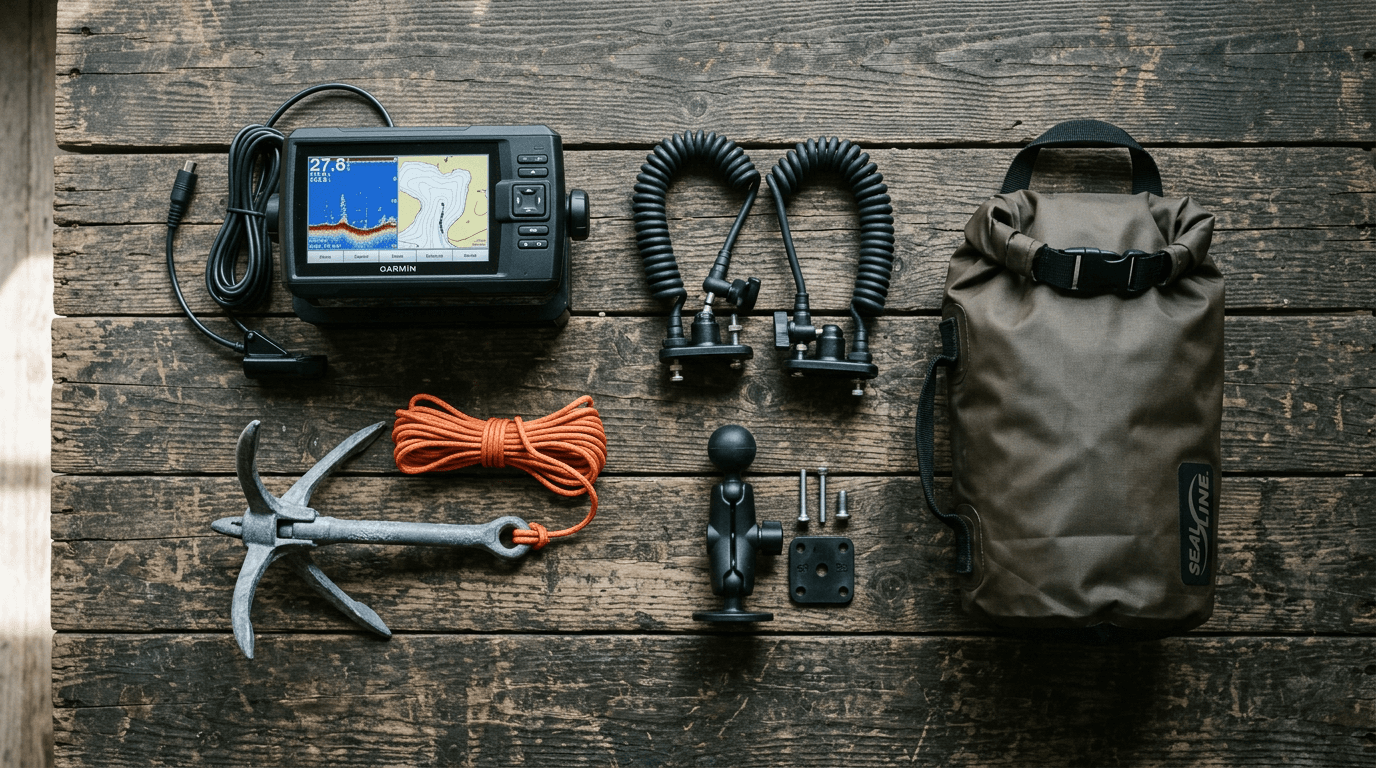
Fishing Kayak Attachments: The Complete Rigging and Mounting Guide
Best fishing kayak attachments explained — track systems, rod holders, fish finder mounts, anchors, and storage. What to buy, where to mount it, and how.
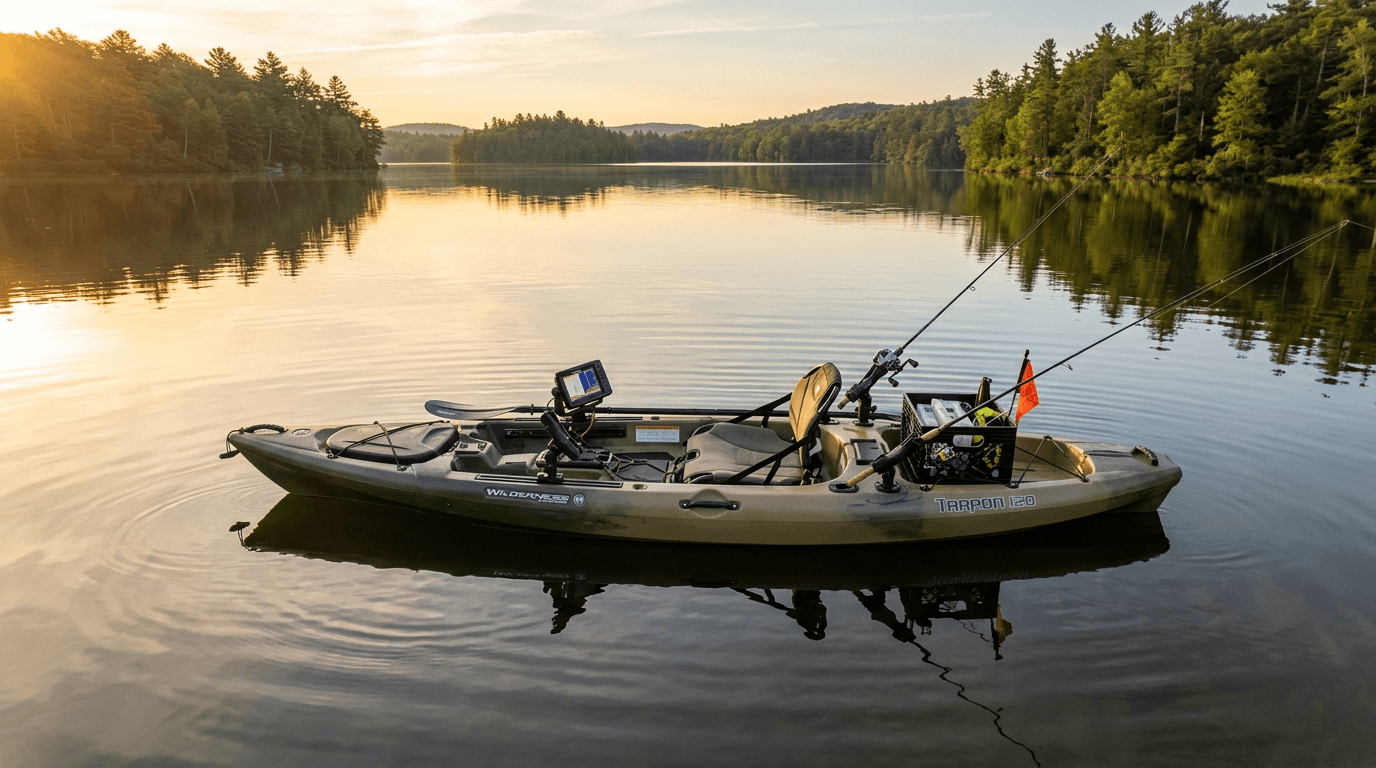
Kayak Fishing Accessories: What to Buy First, What to Skip, and How to Build the Right Setup
Which kayak fishing accessories are worth buying? We break down every category by priority and budget — rod holders, anchors, fish finders, and more.