Affiliate Disclosure:This article contains affiliate links. If you purchase through our links, we may earn a small commission at no extra cost to you. We only recommend gear we've tested or would genuinely use ourselves.
buying guide • May 15, 2026 • 22 min read · The Bite Intel Team
Angler Kayak vs Regular Kayak: 7 Key Differences That Change How You Fish
Angler kayak vs regular kayak — the real functional differences in stability, storage, speed, and cost. Plus whether your regular kayak is worth converting.
You're looking at a $500 recreational kayak and a $1,200 angler rig sitting next to each other. They both float. They both paddle. The price difference is real, and so are the trade-offs.
Here's what most comparison articles miss: the angler kayak vs regular kayak debate isn't really about rod holders and color schemes. It's about hull geometry, seating position, and whether your body position on the water lets you actually fish effectively for 6 hours — or just survive the outing. The structural differences run deeper than the spec sheets suggest.
We've tested both on bass lakes, crappie flats, and catfish rivers. This post covers everything that actually matters on the water: stability under load, storage access while anchored, paddling speed trade-offs, and what a realistic conversion of a regular kayak actually costs. If you're trying to decide whether a fishing kayak is worth the extra money for how you fish, read this first.
What Exactly Is an Angler Kayak?
An angler kayak — also called a fishing kayak — is built from the hull up for fishing, not paddling efficiency. The core design differences are a wider, flatter hull for primary stability, a sit-on-top deck with integrated rod holders, gear tracks for accessory mounting, and a raised seat that puts you 4–8 inches above the deck for better casting angles and sightlines. Most angler kayaks carry 350–500+ lbs of weight capacity to handle a full day's gear without compromising stability.
A fishing kayak vs regular kayak comparison starts with the hull: angler kayaks average 30–36 inches wide at the beam. Recreational kayaks run 22–28 inches. That 6–8 inch difference sounds minor until you're leaning sideways to grab a lure out of a side pocket with a bass running your line.
Regular kayaks are designed for paddling — covering water efficiently, tracking straight, and moving fast. Everything that makes them good at that makes them difficult to fish from seriously.
Stability: Why Hull Width Changes Everything
Fishing kayaks are more stable than regular kayaks in flat water because they're built wider, using flatter-bottomed hulls that resist tipping when you shift weight sideways. That's primary stability — the kind that matters when you're setting a hook, landing a fish, or reaching into your gear crate behind your seat.
Most fishing kayaks in the $800–$1,500 range measure 33–35 inches wide. At 33 inches (Wilderness Systems Tarpon 120), you can lean over to net a fish with one hand while your other hand holds the rod without thinking about capsizing. At 34 inches (Old Town Topwater 106), standing to cast is genuinely feasible with practice. At 34.5 inches (Bonafide SS127, Jackson Coosa FD), standing is the expected use case.
Recreational kayaks at 24–27 inches wide feel tippy the moment you shift weight laterally — which happens constantly when fishing. That's not a design flaw. They're optimized for secondary stability — the behavior when you're rolling with water movement in rivers or coastal conditions. That characteristic helps in technical water but punishes you while fishing.
Tip
If standing to cast is part of how you fish, look for a beam of at least 33 inches and a flat-bottomed or pontoon-style hull. The Bonafide SS127 (34.5") and Jackson Coosa FD (34.5") are the most confidence-inspiring standing platforms currently on the market.
One measurement that rarely shows up in comparison articles: secondary stability — how the kayak behaves when leaned over. Fishing kayaks with wide, flat hulls have more abrupt secondary stability — they feel stable right up until they don't. Narrow kayaks roll more progressively, which is better for experienced paddlers in technical water. For fishing on a bass lake or crappie pond, you want that flat-bottomed confidence.
According to the U.S. Coast Guard's recreational boating statistics, kayaks have one of the lower capsizing rates per trip among paddle craft — but fishing-related weight shifts are a documented contributing factor. Running a fishing kayak at 70–75% of its rated weight capacity significantly reduces instability from gear shifts.
Storage, Rod Holders, and Gear Tracks: Built-In vs. Bolted-On
The average fishing kayak in the $700+ range comes with 2–4 flush-mount rod holders, 4–6 feet of gear track, a stern tank well sized for a milk crate or cooler, and one or two sealed hatches. That's not an upgrade package — it's standard equipment on virtually every dedicated fishing kayak above $600.
Regular kayaks have a small bow hatch (sometimes), possibly a day hatch behind the seat, and bungee cords on the deck. No rod holders. No gear tracks. No tank well. You're resting rods across your lap while you paddle, and "tackle storage" means whatever fits in the day hatch alongside your lunch.
The gear track system matters more than most buyers realize. Tracks — typically YakAttack, Yakima Rail, or RAM brand — are slotted rails bolted to the kayak deck that let you mount fish finders, additional rod holders, camera mounts, cup holders, and paddle clips anywhere along the rail without drilling new holes. A standard fishing kayak has 2–4 tracks installed factory, usually 18–24 inches long on each gunwale. You slide mounts in and reposition them in seconds.
Converting a regular kayak to have gear tracks means purchasing the tracks ($30–$50 each), drilling holes in the hull, using rivets or bolts with backing plates, and sealing every penetration against leaks. It works — but it's 2 hours of work per track and permanently modifies a boat not designed for it.
For rod holding without drilling, the clamp-on approach works on most recreational kayaks with flat or rounded gunwales. The RAM Tube Jr. rod holder (around $25) clamps to the gunwale and holds standard rods at a fixed angle. It's a legitimate solution for occasional fishing.
Check RAM Tube Jr. Rod Holder on AmazonTwo clamp-on holders get you functional. But they're not the same as four flush-mount holders positioned for your casting style, two stern holders for soaking rods, and a full gear track for mounting your Garmin Striker where you can actually read it.
See our full breakdown in the kayak rod holder buying guide for a head-to-head comparison of mounting systems across kayak types.
Can You Fish From a Regular Kayak?
Yes — and a lot of anglers do. But you need to understand the specific problems before deciding whether it works for your situation.
Rod management is the first problem. You need both hands to paddle. Regular kayaks have nowhere to rest rods while moving. They end up across your lap (where they snag your paddle stroke), leaning against the hull (where they slide overboard), or wedged between your legs (where they interfere with every stroke). Fishing kayaks have 2–4 flush-mount holders that keep rods vertical, secure, and completely clear of your paddling motion.
Seat height is the second problem. Sit-in recreational kayaks position you at or near water level. That low position kills your casting leverage and makes it harder to see structure, spot fish, and work shallow flats where depth and bottom composition matter. Fishing kayaks use elevated sit-on-top seats that put you 4–8 inches above the deck — a change that meaningfully affects your casting radius and your sightlines into the water.
Wet re-entry matters if you ever flip. Sit-in regular kayaks require draining and re-entry assistance after a capsize — you're climbing into a hull full of water while wearing waders or fishing clothes. Fishing kayaks are sit-on-top by design: you fall off, you climb back on. No draining, no paddle float, no assistance required. In waders especially, this is a meaningful safety difference.
Gear access while anchored is the fourth problem. Reaching into the bow hatch of a sit-in kayak while anchored, holding a rod, and managing a net are three activities that don't coexist gracefully. Tank wells and open deck storage on fishing kayaks mean your tackle crate, net, and cooler are reachable from your seat without repositioning your whole body.
For occasional light fishing — dropping a line on a calm lake for an hour while paddling — a regular kayak is workable. For any serious fishing where you're setting anchors, switching rigs, landing fish, and covering structure over several hours, a dedicated fishing kayak delivers a substantially better day.
If you already own a regular kayak and want to make it fish-ready without a new purchase, the highest-impact single upgrade is a gear track system:
Check YakAttack GT90 Gear Track on AmazonTwo tracks and four rod holders runs about $100–$150 in parts. You still won't have the stability or seat height of a fishing kayak, but the rod management problem — the most frustrating daily limitation — gets solved.
Speed and Paddling Efficiency: The Real Trade-off
Regular kayaks are faster. That's physics, not opinion. A narrower, rounded hull creates less drag. A 24-inch-wide touring kayak paddles measurably faster than a 34-inch-wide fishing kayak at the same effort level — you'll feel the difference immediately if you've paddled both.
For most freshwater fishing scenarios, it doesn't matter. Bass anglers on small lakes, crappie fishermen working shallow flats, catfish anglers anchoring up on a river bend — none of these situations require covering miles of open water quickly. You launch, paddle 400 yards to your spot, anchor, and fish. The speed difference in that scenario is about 3 minutes.
Where it genuinely matters:
- Large reservoirs where your best spots are 1.5+ miles from the ramp
- Pre-dawn runs to beat other anglers to a specific shoreline
- River fishing where you're covering long stretches of water to find active fish
- Ocean or bay fishing in current or wind
For those scenarios, the solution most serious anglers reach for is a pedal drive. Kayaks with fin-based or propeller pedal systems — Hobie MirageDrive, Old Town PDL, Jackson Coosa FD — cruise at 3–4 mph hands-free. You cover water at a useful pace while your hands are free to cast, work a lure, or manage line. The speed gap between a paddle fishing kayak and a narrow rec kayak closes significantly, and you arrive without shoulder fatigue.
Info
According to the Recreational Boating & Fishing Foundation (RBFF), kayak fishing participation grew 54% over the decade from 2013 to 2023. Pedal drive adoption was a major contributor — anglers who switched from paddle to pedal consistently reported covering 40–60% more water per trip.
If speed matters to how you fish and you want a fishing kayak, budget $1,400+ for a pedal drive model. Below that price point, accept the paddling speed trade-off and plan your water accordingly. Most freshwater anglers on normal-sized lakes fish better — not faster — with the extra stability and gear access a dedicated fishing kayak provides.
Price Breakdown: What You're Actually Paying For
Here's the market by tier in 2026:
Regular/Recreational Kayaks:
- Budget ($300–$500): Pelican Sentinel 100X, Lifetime Lotus 8, Sun Dolphin Aruba 10
- Mid-range ($500–$900): Perception Swifty 9.5, Old Town Vapor 10, Wilderness Systems Pungo 105
- Touring ($900–$2,500+): Current Designs Solstice, Delta 15.5
Angler/Fishing Kayaks:
- Budget ($500–$800): Pelican Catch PWR 100, Lifetime Tamarack Angler 100, Sun Dolphin Boss 10
- Mid-range ($800–$1,400): Old Town Topwater 106, Perception Pescador Pro 12, Wilderness Systems Tarpon 120
- Pedal/Premium ($1,400–$3,500+): Hobie Mirage Passport 12, Old Town Sportsman PDL, Jackson Coosa FD, Bonafide SS127
The overlap zone — $600–$900 — is where most first-time decisions get made. In that window, you can get a very good recreational kayak or an entry-level dedicated fishing kayak. If fishing is your primary purpose even 70% of the time, take the fishing kayak. The stability and rod management alone justify it.
Here's how four specific models stack up across price points:
| Product | Rating | Price | Best For | Link |
|---|---|---|---|---|
| Pelican Catch PWR 100 | 3.9/5 | $500–$600 | Budget first-timer | Check Price |
| Old Town Topwater 106 | 4.4/5 | $850–$950 | Best value mid-range | Check Price |
| Jackson Kayak Coosa FD | 4.6/5 | $1,100–$1,300 | Serious bass anglers | Check Price |
| Hobie Mirage Passport 12 | 4.7/5 | $1,700–$1,900 | Pedal drive / hands-free | Check Price |
Pelican Catch PWR 100 — The most affordable true fishing kayak with integrated flush rod holders, a stern tank well, and a sit-on-top design. At 31 inches wide it's on the narrower side for fishing kayaks, so standing isn't realistic, but it handles flat water fishing effectively. Weighs 57 lbs — manageable solo. Good starting point when budget is the binding constraint.
Old Town Topwater 106 — Our pick for the $800–$1,000 range. 34 inches wide, elevated seat with genuine lumbar support, two flush rod holders plus two stern holders, two gear tracks, and a 425 lb weight capacity. The hull handles standing with practice. It's the kayak that fits most freshwater scenarios without a notable compromise, and it's built to last 10+ seasons.
Jackson Kayak Coosa FD — Adds a foot-controlled FinnDrive pedal system to a 34.5-inch hull that genuinely handles standing confidently. The choice for anglers who stand and cast regularly — bass anglers working structure on clear-water lakes especially. At $1,200 it's a serious commitment, but it's the kayak that doesn't get replaced two seasons in.
Hobie Mirage Passport 12 — The standard recommendation for anglers who need to cover distance. The MirageDrive 180 pedal system propels you forward and reverse hands-free at 3–4 mph. At $1,800 it's a substantial investment, but anglers who convert to pedal systems rarely go back.
Seat Comfort for Long Days: More Important Than Most Buyers Expect
Seat comfort is the third most-cited regret among buyers who chose a regular kayak for fishing — behind stability and rod management, but ahead of almost everything else.
Sit-in recreational kayaks put you in a low, reclined position with legs extended in front. That's fine for a 90-minute paddle. After 5 hours of sitting still while anchored — the same position, no movement — hip flexor and lower back load becomes genuinely painful. We've seen anglers pull off the water early specifically because their seat position defeated them before the fish did.
Fishing kayaks use elevated sit-on-top seats — typically 4–8 inches above the deck — that keep your hips above your knees. That position distributes weight through your thighs rather than compressing your lower back. Better seats (Old Town Comfort Series, Perception AirPro Mesh, Wilderness Systems Phase 3 AirPro) have adjustable back angle, lumbar support depth, and thigh pad positioning. They're designed for 8-hour days.
If you fish from an existing sit-on-top recreational kayak with a flat foam seat and want a meaningful upgrade without a new boat purchase, the GTS Sport Sit-On-Top seat (~$80) clips to most kayak D-rings and adds real lumbar support.
Check GTS Sport Kayak Seat on AmazonSee our full testing notes in best kayak seat upgrades for fishing — we ran six seats across full-day outings.
Converting a Regular Kayak for Fishing: Realistic Costs
If you already own a regular kayak and want to make it functionally useful for fishing without buying a second boat, here's what an honest conversion actually costs:
| Upgrade | Estimated Cost |
|---|---|
| 2 clamp-on rod holders (RAM Tube Jr. or similar) | ~$50 |
| YakAttack GT90 gear track kit (2 × 12" sections) | ~$70 |
| Elevated kayak seat (GTS Sport or equivalent) | ~$80 |
| Anchor trolley kit | ~$45 |
| Stern milk crate with rod holders | ~$40 |
| Total | ~$285 |
That $285 produces a workable fishing setup on a regular kayak. You still won't have the primary stability, weight capacity, or integrated storage of a purpose-built fishing kayak — but rod management gets solved and the day becomes substantially more functional.
The honest math: if you fish 10+ days per year, the cost of the conversion plus the time spent fighting an inadequate setup adds up faster than the price gap between your rec kayak and an entry-level fishing kayak. If you can sell your rec kayak for $300–$500 and apply that toward an Old Town Topwater, the total out-of-pocket difference is often $400–$600. Most anglers who make that trade don't look back.
For the full process — anchor trolley setup, rod holder positioning, gear track mounting, fish finder installation — see how to rig a kayak for fishing.
Weight Capacity: The Spec That Actually Constrains You
Most buyers underestimate this number. It's one of the most meaningful structural differences between angler kayaks and regular kayaks.
A standard recreational kayak carries 250–300 lbs — designed for one paddler with light gear. A mid-range fishing kayak carries 400–500 lbs — designed for an angler plus a full day's worth of tackle, cooler, electronics, and PFD.
The capacity number matters because of how stability works: a kayak running at 100% of rated capacity sits low and becomes unstable. Industry best practice is 70–75% of rated capacity maximum. A 200 lb angler with 50 lbs of gear (250 lbs total) needs a kayak rated for at least 333 lbs — and ideally 400+ for real stability margin.
Most recreational kayaks at 250–300 lb capacity don't leave that margin for a loaded angler. Most fishing kayaks at 400–500 lb capacity do.
Calculate your number:
- Body weight + PFD (~3 lbs) + paddle (~2 lbs)
- Rods and reels (2–4 combos, ~5–8 lbs each)
- Tackle bags/boxes (~10–20 lbs full)
- Cooler, food, water (~15–25 lbs for a day trip)
- Electronics (fish finder + battery, ~5–8 lbs)
Total × 1.35 = minimum recommended rated capacity.
A 185 lb angler with modest gear might need 350–375 lbs. A 220 lb angler running full electronics and an ice cooler might need 475–500 lbs. Know your number before committing to a hull.
Which Should You Actually Buy?
Buy a dedicated angler kayak if:
- Fishing is your primary use — even 70/30 fishing vs. paddling justifies it
- You carry more than one rod, a tackle bag, and a cooler
- You want to mount a fish finder or other electronics
- You fish for more than 3–4 hours at a stretch
- Standing to cast is part of your technique or you want it to be
- You weigh 180 lbs+ with a full day's gear
Stick with a regular kayak if:
- Paddling is genuinely your primary use and you fish maybe 5–6 days per year
- You want speed for touring, open water, or river running
- Your fishing is strictly casual — one rod, minimal gear, short trips
- Budget is under $500 and you can't stretch higher
The gray zone — consider a hybrid: The Perception Pescador Pro 12 ($700–$800) sits between categories — 32 inches wide, two flush rod holders, a comfortable elevated seat, and a hull that tracks reasonably well for covering water. It's slower than a pure fishing kayak and narrower for standing, but it's a capable compromise for someone who paddles and fishes in roughly equal proportions across different trips.
Tip
Before buying anything in the $600–$1,000 range, rent both a fishing kayak and a rec kayak for a full day each. Most outfitters near any decent bass lake stock both types. Two rentals runs $100–$150 total — far cheaper than buying the wrong boat and selling it six months later at a loss.
For a full breakdown of the mid-range field, see best fishing kayaks under $1,000. For gear setup once you've chosen a hull, see kayak fishing setup for beginners.
Frequently Asked Questions
Can you use a regular kayak for fishing?
Yes, but with real limitations. A regular sit-on-top kayak works for casual fishing in still water with light tackle on short trips. Problems stack up on longer outings: no rod holders mean rods are always in the way while paddling, low seat height limits casting leverage, and limited storage access makes switching rigs and landing fish awkward. For serious bass, crappie, or catfish fishing over a full day, a dedicated fishing kayak is substantially more effective and more comfortable.
Is a fishing kayak more stable than a regular kayak?
In flat water, yes — significantly. Fishing kayaks run 30–36 inches wide versus 22–28 inches for recreational models. That extra width creates far better primary stability when landing fish, reaching for tackle, or standing to cast. Regular kayaks have better secondary stability for rolling with waves in rivers or coastal conditions, but that advantage doesn't apply to most freshwater fishing situations.
Can I convert a regular kayak into a fishing kayak?
You can add clamp-on rod holders, gear tracks, and an elevated seat to most regular kayaks for $250–$300. That produces a workable fishing setup without drilling the hull. The result won't match the stability, weight capacity, or rod management of a purpose-built fishing kayak — but if you already own a rec kayak and fish occasionally, it's a legitimate option before committing to a second boat.
Are fishing kayaks harder to paddle than regular kayaks?
Yes — fishing kayaks are wider and heavier, creating more drag and making them slower over distance. Most mid-range fishing kayaks weigh 65–85 lbs versus 45–60 lbs for comparable recreational kayaks. The paddling efficiency difference is noticeable over a mile or more of open water. For anglers who need to cover significant distance, a pedal drive fishing kayak eliminates most of this limitation by propelling the kayak hands-free at 3–4 mph.
What weight capacity do I need in a fishing kayak?
Add your body weight to your gear weight (rods, tackle, cooler, electronics, PFD, paddle — typically 30–60 lbs for a full setup). Multiply that total by 1.35 to get your minimum recommended rated capacity. A 200 lb angler with 50 lbs of gear needs a kayak rated for at least 338 lbs — look at 400+ lb capacity models for a comfortable stability margin. Most mid-range fishing kayaks run 400–500 lbs.
If fishing is why you're on the water, get the fishing kayak. The stability, rod management, and seat comfort improvements make a measurable difference in how many fish you land and how you feel at the end of a long day. The Old Town Topwater 106 at around $900 is the best value for most freshwater anglers buying their first dedicated fishing rig. If budget is the real constraint, the Pelican Catch PWR 100 at $550 gets you on the water with the right fundamentals without breaking anything.
Related Posts
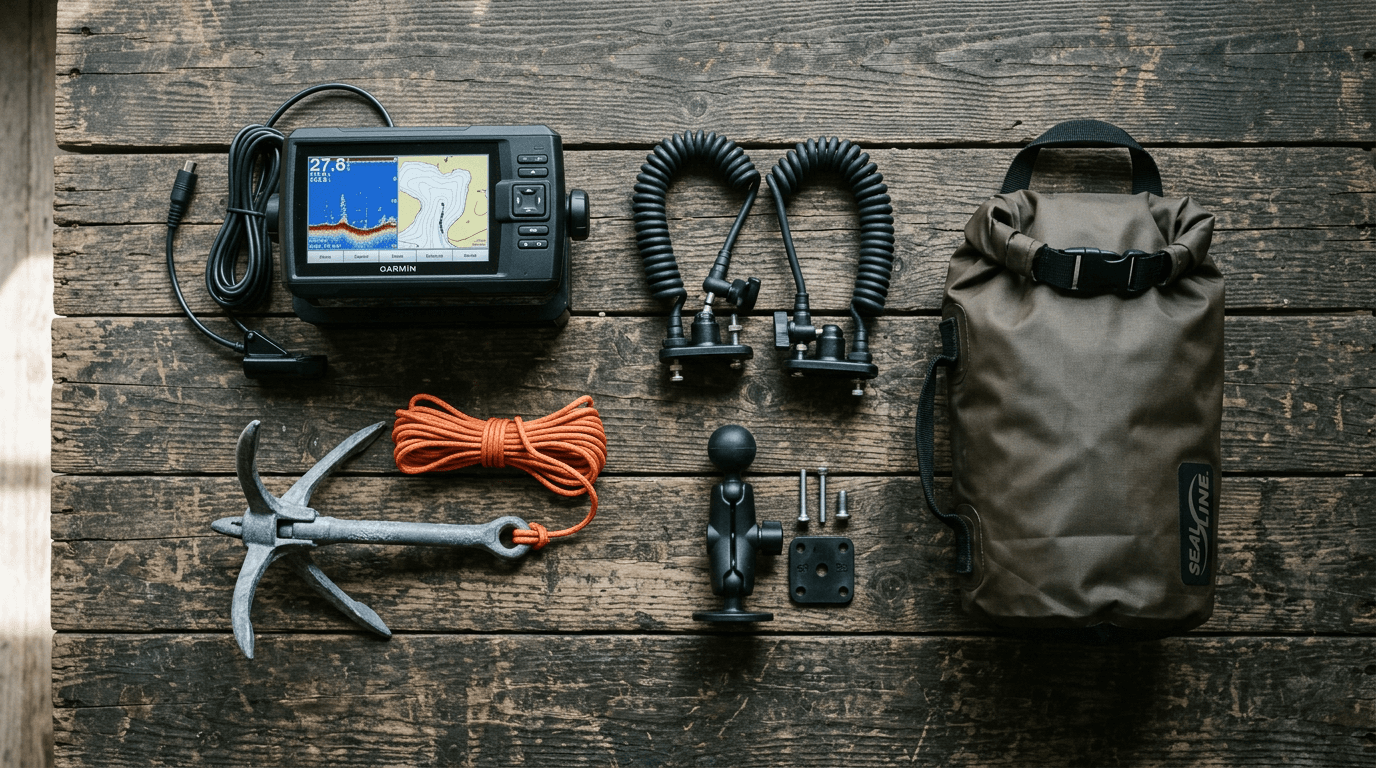
Fishing Kayak Attachments: The Complete Rigging and Mounting Guide
Best fishing kayak attachments explained — track systems, rod holders, fish finder mounts, anchors, and storage. What to buy, where to mount it, and how.
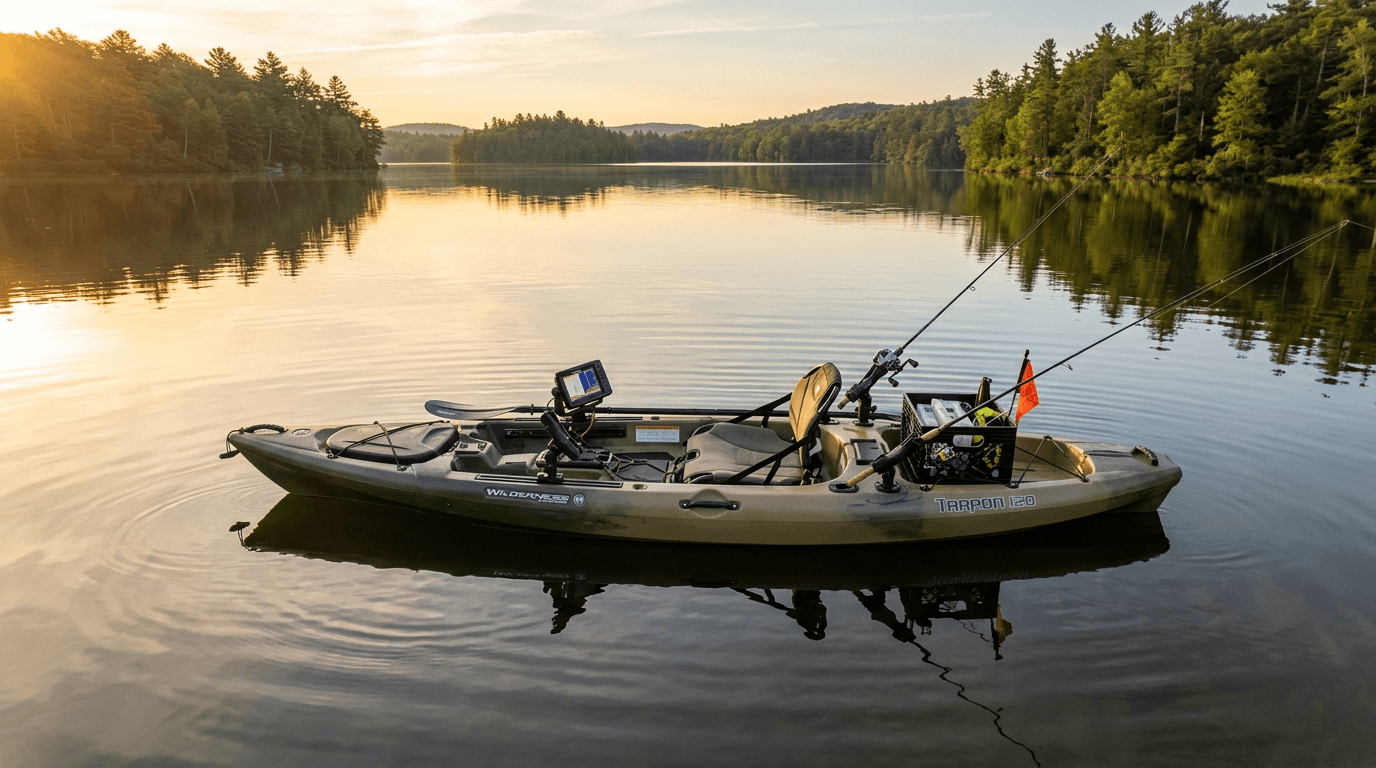
Kayak Fishing Accessories: What to Buy First, What to Skip, and How to Build the Right Setup
Which kayak fishing accessories are worth buying? We break down every category by priority and budget — rod holders, anchors, fish finders, and more.
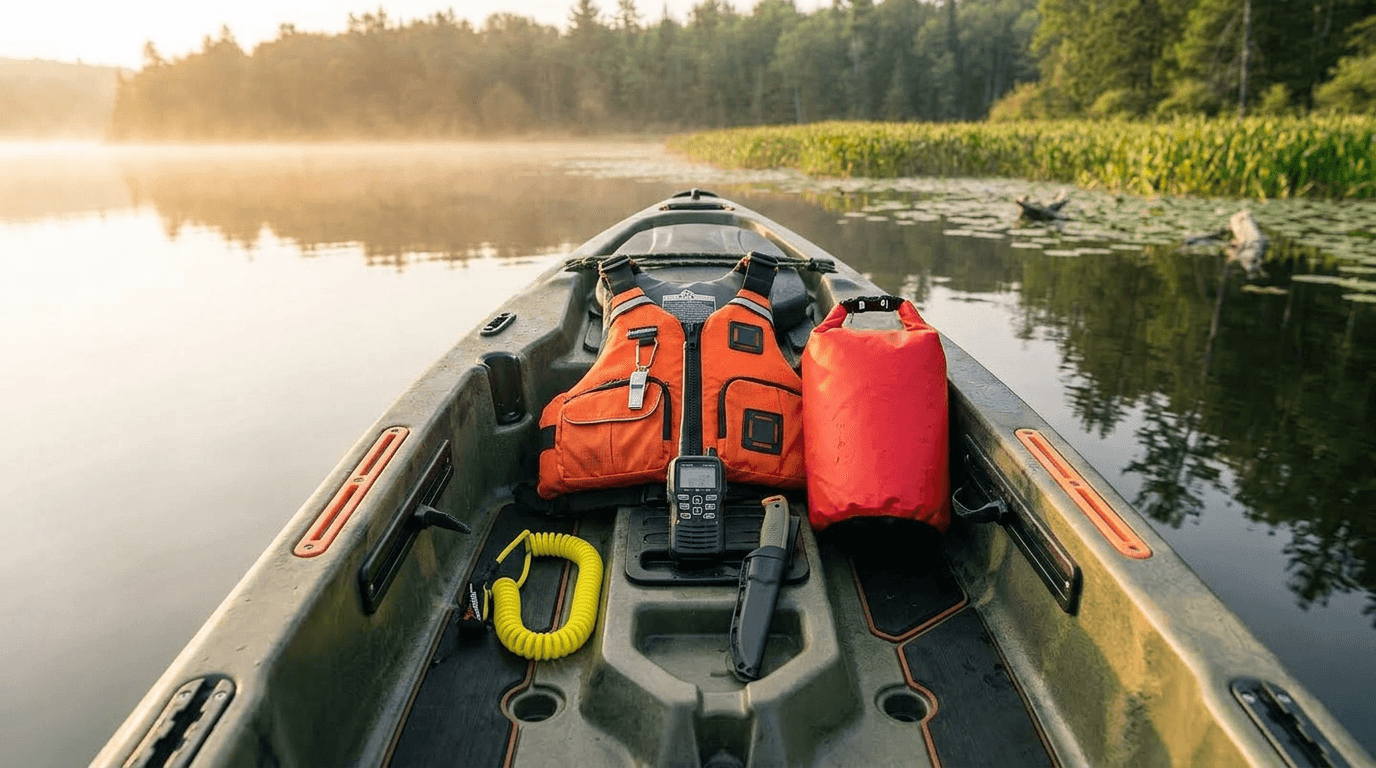
Kayak Fishing Safety Gear Checklist: 12 Must-Haves Before You Launch
Kayak fishing safety gear checklist: 12 must-haves, USCG legal requirements, and fishing-specific items most guides miss — with specific brand picks.