Affiliate Disclosure:This article contains affiliate links. If you purchase through our links, we may earn a small commission at no extra cost to you. We only recommend gear we've tested or would genuinely use ourselves.
how to • May 13, 2026 • 13 min read · The Bite Intel Team
Kayak Bass Fishing Tips: 15 Ways to Catch More Bass from a Kayak
Practical kayak bass fishing tips covering positioning, seasonal patterns, top techniques, lure selection, and gear setup. Written for anglers who want to fish smarter from a kayak.
Kayaks have a genuine advantage over bass boats in a lot of fishing situations — and most anglers who switch to kayak bass fishing figure this out within the first few trips. You can get into 8 inches of water where a boat can't go. You approach a bank without making a sound. You position precisely over a submerged point and hold there with an anchor trolley instead of fighting the trolling motor.
These tips cover how to use a kayak's strengths to catch more bass — from positioning and stealth to seasonal patterns and the specific techniques that work best from a seated, low-profile craft.
Why a Kayak Gives You an Edge for Bass Fishing
Before getting into tactics, it's worth understanding where the kayak advantage actually comes from:
Shallow water access. Most sit-on-top fishing kayaks draw 3–5 inches of water. You fish in creek arms, flooded timber, and backwater pockets that a bass boat literally cannot reach. Bass that get no pressure hold in these spots in numbers.
Silence. A kayak makes almost no noise at idle. No trolling motor hum, no bilge pump, no metal hull banging. Bass in pressured lakes learn boat sounds quickly. A kayak drifting in on a flat doesn't register the same alarm response.
Precise positioning. With an anchor trolley system, you can hold position within a foot or two of a target — a specific dock post, a weed edge, a stump — and work it completely before moving on. You control your position rather than fighting drift.
Low visual profile. You're sitting at water level. From a bass's perspective you look less like a predator threat than a standing angler on a boat deck.
Seasonal Bass Patterns from a Kayak
Spring — Pre-Spawn and Spawn
Spring is the best time to kayak bass fish. Bass move shallow to spawn and your kayak can follow them into water a boat never sees.
Pre-spawn (water 48–55°F): Bass stage near spawning flats on the first significant structure — points, channel bends, wood cover. Work slow presentations along these edges: jig-and-pig, Texas-rigged creature baits, slow-rolled swimbaits. The fish are there to feed and build energy before the spawn.
Spawn (water 58–65°F): Bass bed in 1–4 feet of water on hard bottom — gravel, sand, shell beds. Your kayak gets you right to them without blowing them off with boat noise. Sight fishing with a drop shot or shaky head to a bedding bass is one of the most effective kayak fishing techniques there is.
Post-spawn: Fish are stressed and scattered. Target females recovering in deep structure adjacent to spawning flats. Males hold shallow to guard fry — walk a soft plastic over fry schools and hang on.
Summer — Deep Structure and Shade
When surface temps hit the 80s, bass go deep or go to shade. From a kayak, work:
- Submerged structure: Points, humps, and channel ledges in 12–20 feet. A fish finder is the difference-maker here — you can't fish structure you can't see.
- Shade: Dock shade, overhanging trees, bridge pilings. Position your kayak 20 feet out and cast parallel to the shade line. Bass hold in shade for temperature, not just comfort.
- Dawn and dusk: The bite windows. Water surface temps drop enough that bass chase topwater on flats during the first and last 30 minutes of light.
Fall — Reaction Baits and Feeding Fish
Fall is the second-best season for kayak bass fishing. Bass chase shad aggressively before winter. The patterns are straightforward: follow the bait.
Watch the surface for shad schools. Bass herd shad into coves and creeks in fall — you'll see the commotion. Get ahead of the school and cast reaction baits: crankbaits, lipless crankbaits, spinnerbaits. The bite can be as fast as you can cast.
Creek mouths in fall are the most productive single location on most lakes. Position your kayak at the mouth and work it thoroughly before moving up the creek arm.
Winter — Slow Deep Presentations
Winter bass are cold, slow, and deep. The kayak advantage diminishes somewhat in cold weather fishing (you're less comfortable), but the bite can be excellent if you're willing to fish slowly.
Spots and smallmouth bass are more active in winter than largemouth. Focus on deep rocky structure in 15–25 feet. Use a drop shot or shaky head and fish it with almost no movement. The bites are subtle — a slight weight shift or line twitch.
Tip
Dress for cold water immersion in winter, not just cold air. Water below 50°F is dangerous in a capsize. A wetsuit or drysuit under your fishing clothes is not optional — it's required safety gear.
Top Kayak Bass Fishing Techniques
Flipping and Pitching to Cover
This is the technique that translates most directly from boat fishing to kayak fishing — and arguably works better from a kayak because you can get closer to the cover without spooking fish.
Flip and pitch to:
- Dock pilings and crossbeams
- Laydowns and submerged timber
- Overhanging brush
- Floating weed mats
Use a 7' medium-heavy rod with 17–20 lb fluorocarbon or 40–50 lb braid. Texas-rigged creature baits or jigs in 3/8 to 1 oz weights. Get within 10–15 feet of the target — your kayak's stealth lets you do this quietly.
Position your kayak with your anchor trolley so you're quartered to the cover and can flip multiple targets without repositioning.
Topwater at Dawn
The first 30–45 minutes of light are the topwater window. Bass are shallow, aggressive, and hitting anything on the surface. This is when the kayak's silent approach matters most — you can ease into position on a flat or along a bank without blowing the bite.
Best topwater lures for kayak fishing: Heddon Zara Spook, Berkley Choppo, Whopper Plopper, and buzzbaits along weed edges. Keep a topwater rigged on a dedicated rod so you can switch immediately when you see activity.
Drop Shot for Deep Fish
When bass are suspended or holding on deep structure, a drop shot is the precision tool. It keeps your bait at the exact depth of the fish and lets you fish vertically, which is actually easier from a kayak than from a standing position on a boat.
Lower a 1/4 oz drop shot sinker to the bottom and keep 12–18 inches of leader to a small finesse worm or minnow bait. Work it with subtle twitches in place — don't move the bait, just animate it. Let the weight rest on bottom and shake your rod tip.
Swim Jigs Along Weed Edges
Swim jigs are one of the most effective kayak bass techniques for covering weed lines, grass edges, and mixed cover. Cast parallel to the edge and retrieve at a pace that keeps the jig just above the grass. When it ticks the top of the vegetation, pause briefly — that's when bass hit.
The kayak lets you position parallel to the edge and work it from one end to the other systematically. This is harder to do efficiently from a bass boat anchored perpendicular to the edge.
Recommended Lures for Kayak Bass Fishing
These five categories cover the full range of kayak bass situations:
Soft Plastic Worms and Creature Baits
The backbone of kayak bass fishing — versatile, affordable, and effective year-round. Rig them Texas-style or on a drop shot.
Check Price on AmazonTopwater (Walking Baits)
For dawn and dusk surface action on flats and along banks. The Heddon Zara Spook is the standard.
Check Price on AmazonLipless Crankbaits
Year-round producers. Rip them through grass in spring and fall, slow-roll them over deep flats in summer.
Check Price on AmazonSwim Jigs
Along weed edges, dock lines, and mixed cover. Pair with a paddle-tail swimbait trailer.
Check Price on AmazonFinesse Jigs
For pressured fish and clear water. A 3/8 oz football head or casting jig with a craw trailer catches bass everywhere year-round.
Check Price on AmazonHow to Position Your Kayak for Bass Fishing
Positioning is where kayak bass fishing becomes a skill separate from regular fishing. You're controlling a floating platform while also fishing — these techniques make it work:
Use your anchor trolley. An anchor trolley system is the most important positioning tool on a kayak. Run the anchor line through the trolley to position your anchor point at the bow or stern, which controls the angle your kayak faces relative to wind and current. Position yourself quartered to your target so you can cast comfortably. See our full guide on anchor trolley setup and use for the detailed mechanics.
Read wind direction before anchoring. Set your anchor trolley so the wind pushes you toward, not away from, your target. A quartering wind angled toward a bank lets you fish the bank without fighting to maintain distance.
Use your paddle as a rudder. For short-term positioning without anchoring, a paddle blade dragged in the water provides instant steering. Keep it within reach when you're making short repositions.
Drift fishing. Let wind move you slowly along a bank or edge. This is particularly effective on windy fall days when bass are chasing bait — you cover more water and present lures naturally. Control drift speed by dragging your paddle.
Stealth approach. Approach banks and shallow structure from the deep side, paddling slowly and avoiding the paddle drip on the hull. Get to within casting range and stop before making your first cast. Bass in the shallows react strongly to noise and sudden movement.
Warning
Don't anchor directly over fish you're targeting. Anchor or position so you're casting to the structure, not sitting on top of it. The kayak's shadow and noise at close range will push fish out of position.
Gear Checklist for a Kayak Bass Day
Rod setup:
- Primary rod: 7' medium-fast spinning with 10–14 lb fluorocarbon (soft plastics, jigs)
- Secondary rod: 7' medium baitcaster or spinning (crankbaits, topwater, swimbaits)
- Optional third: 6'6" medium-light spinning (finesse, drop shot)
Store your rods in flush-mount rod holders on the kayak deck so they're instantly accessible without fumbling.
Tackle organization: A fishing crate in the tank well holds your tackle boxes, tools, and spare gear organized and accessible. Much more practical than digging through a dry bag for every lure change.
Landing fish: A rubber-mesh landing net with a folding handle stores flat on the deck. Avoid hard mesh nets — they damage the fish's slime coat if you're practicing catch-and-release. Get a net with a short, manageable handle for landing bass from a low kayak seat.
Essential accessories:
- Fish gripper / lip grip tool
- Needle-nose pliers for hook removal
- Digital scale (optional but satisfying)
- Polarized sunglasses — essential for sight fishing and seeing structure
- Extra paddle leash so you don't lose your paddle mid-fight
Best Times and Conditions for Kayak Bass Fishing
Best times:
- Dawn to 9 AM — Best topwater bite, bass active in the shallows
- Late afternoon to dusk — Second feeding window, especially in summer
- Overcast days — Bass stay shallower all day; the bite window extends significantly
- Post-front (2nd day) — The day after a cold front passes, pressure stabilizes and fish become active again
Worst conditions:
- High-pressure bluebird days after a cold front — Bass go deep and lock up; fish slow and deep
- Midday summer sun — Surface temps peak, bass retreat to deep shade or structure; adjust your timing
- Heavy rain during the event — Low visibility and disturbance slows the bite; the hours after rain clears are often excellent
Water temperature reference:
- 48–55°F — Pre-spawn, fish are stacking up and feeding hard
- 58–68°F — Peak spawn and post-spawn, highest bass activity
- 72–82°F — Summer patterns, early/late bite windows
- Below 50°F — Winter patterns, slow and deep
Frequently Asked Questions
Do I need a kayak specifically designed for fishing? A fishing-specific kayak makes the experience significantly better — rod holders, gear tracks, wider stability platform, and a proper seat are all standard on dedicated fishing kayaks. A recreational kayak works but you'll quickly want the features a fishing kayak provides. See our best fishing kayaks under $1000 guide for the best starting points.
What's the best kayak for bass fishing? Wide, stable sit-on-top kayaks in the 12–13 foot range work best for bass fishing — enough length for straight tracking, wide enough to stand up briefly for sight fishing, and stable enough to fight a fish comfortably. Check our best fishing kayaks under $1000 roundup for specific recommendations.
How do I find bass from a kayak? The same way you find them from any platform: look for structure (points, humps, ledges, weed edges, wood cover) and relate it to water temperature and time of year. A fish finder is highly valuable for seeing what's underwater — depth, structure, and fish location — and is one of the best investments for serious kayak bass fishing.
How many rods should I bring? Two to three rods is the practical range for a kayak. One for soft plastics/jigs, one for moving baits (crankbaits, topwater), and optionally a finesse setup. More than three becomes difficult to manage in a kayak cockpit safely.
Can I stand up in a kayak to cast? Some wider fishing kayaks (typically 34"+ beam) support standing, which helps with sight fishing for bedding bass. Most kayaks require you to be seated for safe casting. If standing while fishing is important to you, look for kayaks specifically marketed as stand-up stable.
Is kayak bass fishing better than bank fishing? In most situations, yes. The kayak's ability to reach water that bank anglers can't access — mid-lake structure, far banks, backwater pockets — is a significant advantage. You also move with the fish rather than being fixed to a spot.
Final Notes
The fastest way to improve your kayak bass fishing is to fish the same water consistently. Learn one lake — its structure, where bass hold in each season, how the fish relate to wind direction and current. A kayak angler who knows their water intimately will always outfish someone with better gear who's fishing unfamiliar water.
Get your rigging dialed in before you focus on technique. An uncomfortable seat, a rod holder that's in the wrong position, or a crate that blocks your reach all take focus away from fishing. Once your kayak is set up right, the fishing becomes the focus.
The gear that makes the biggest difference for kayak bass fishing, in order of impact: a good fish finder (for finding structure and fish), a reliable anchor trolley (for positioning), and organized rod storage (for switching presentations quickly). Everything else is secondary.
Related Posts
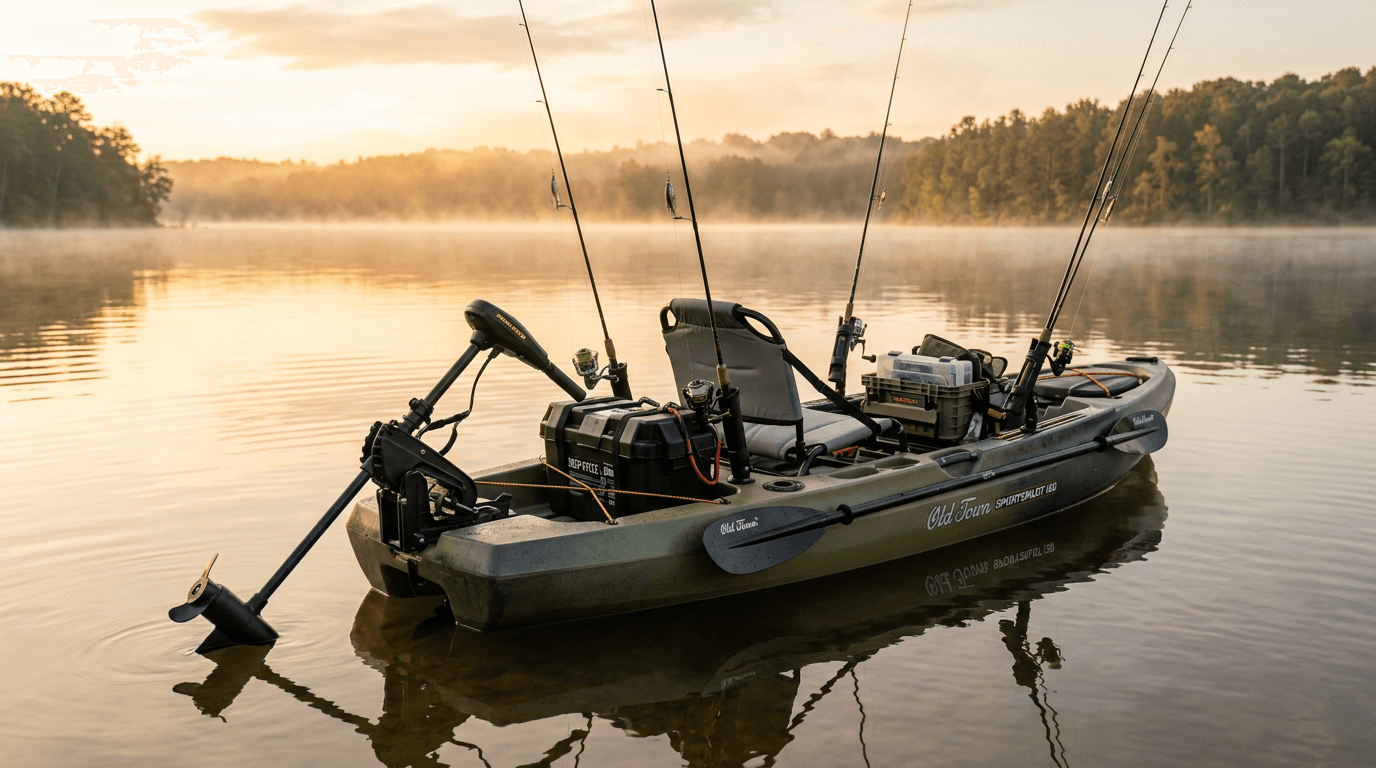
How to Add a Trolling Motor to a Kayak: Complete Installation Guide
Learn how to add a trolling motor to a kayak step-by-step, including thrust sizing, mount types, wiring, battery selection, and state registration rules.
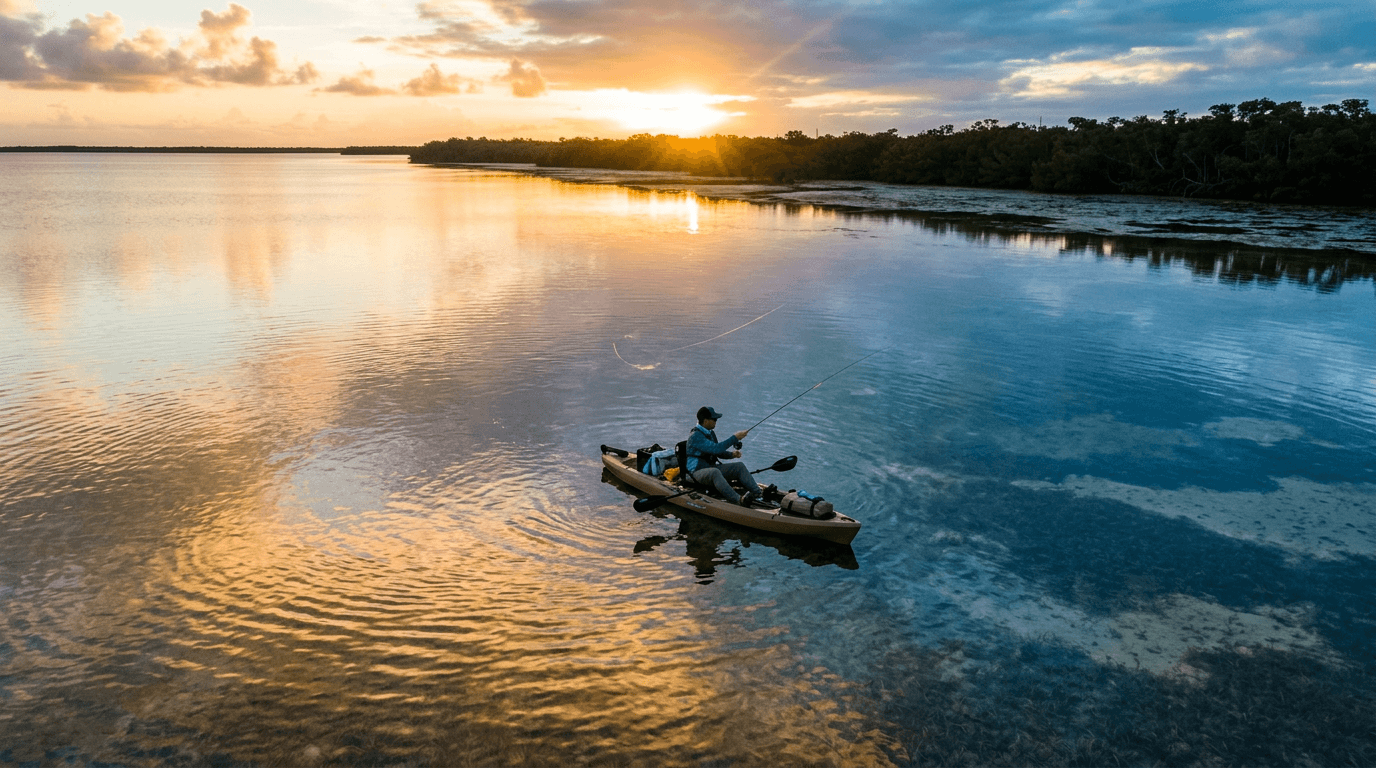
Inshore Kayak Fishing Tips for Beginners: 12 Things Nobody Tells You First
Inshore kayak fishing tips for beginners covering tides, tackle, conditions, and self-rescue so your first saltwater trip doesn't end in frustration.
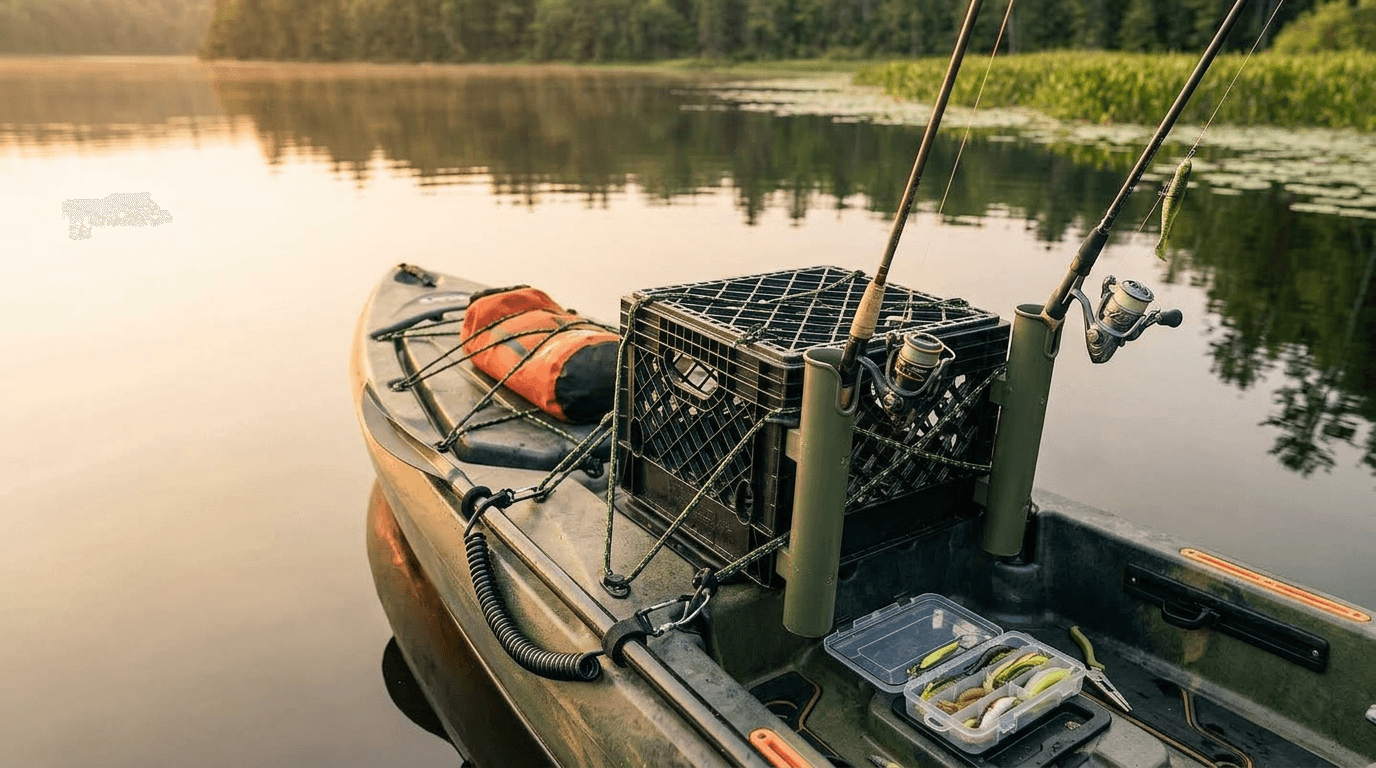
DIY Fishing Kayak Setup: 7 Modifications That Cost Under $100 Total
Rig your fishing kayak with rod holders, anchor trolley, and fish finder for under $100. Step-by-step diy fishing kayak mods with specific products and prices.