
Best Kayak Anchor for Fishing: 6 Picks for Every Water Type
The best kayak anchor depends on where you fish. We compared folding grapnels, a stainless saltwater pick, a stakeout pole, and a drift sock by water type.
Affiliate Disclosure: This article contains affiliate links. As an Amazon Associate we earn from qualifying purchases, at no extra cost to you. Our picks are based on research, not sponsorship.
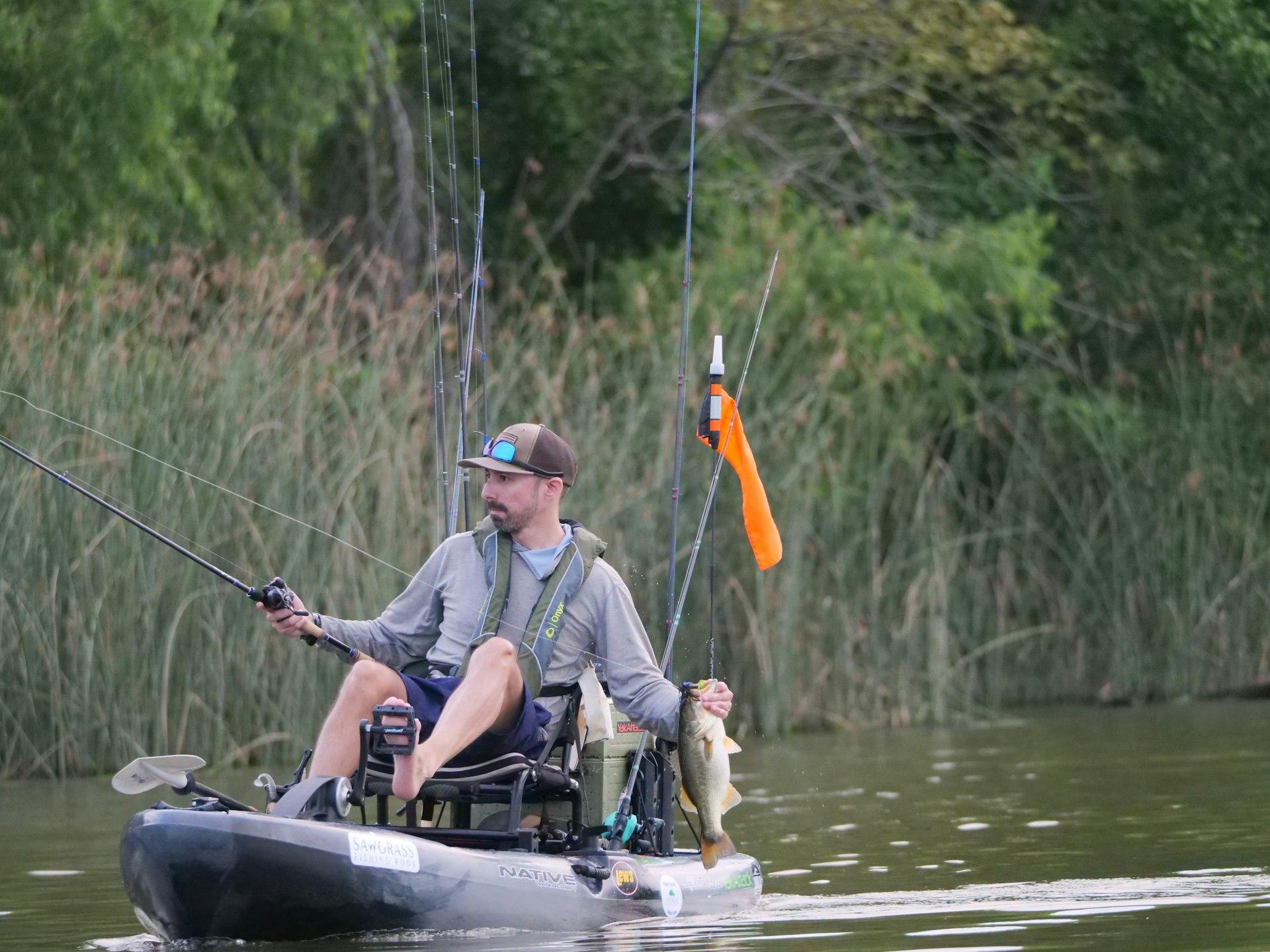
You find fish holding on a ledge, drop a bait, and start sliding off the spot before your lure hits bottom. A good anchor is what turns "I was near them" into "I stayed on them." But "best kayak anchor" doesn't have one answer — the right choice depends on whether you fish deep reservoirs, shallow grass flats, salt, or moving water.
There are really three tools here, and most anglers eventually own two of them: a folding grapnel anchor for holding over structure, a stakeout pole for shallow water, and a drift sock for slowing a drift without pinning in place. This guide covers all three, with specific picks matched to water type and kayak size.
One thing up front: an anchor holds you in a spot, but it doesn't control which direction you face. For that you want an anchor trolley — a rope-and-pulley system that moves your anchor point bow-to-stern so wind and current don't spin you sideways. The anchor and the trolley solve different problems; most kayak anglers run both.
6 Best Kayak Anchors: Quick Comparison
The short version: the Gradient Fitness folding grapnel kit is the best all-around kayak anchor, the Extreme Max stainless grapnel is the pick for saltwater, and a YakAttack ParkNPole is the better tool once you're fishing water under about six feet deep.
| Product | Our score | Price tier | Best for | Link |
|---|---|---|---|---|
| Gradient Fitness Kayak Anchor Kit | 4.7/5 | $$ | Best Overall / Grapnel | Check price |
| Extreme Max BoatTector Stainless 3.5 lb | 4.5/5 | $$ | Best for Saltwater | Check price |
| Extreme Max BoatTector 1.5 lb | 4.3/5 | $ | Best for Small / Light Kayaks | Check price |
| MarineNow 3.5 lb Grapnel Kit | 4.2/5 | $ | Best Budget | Check price |
| YakAttack ParkNPole | 4.6/5 | $$$ | Best for Shallow Water | Check price |
| Lindy Fisherman Series Drift Sock | 4.4/5 | $ | Best for Drifting | Check price |
- Gradient Fitness Kayak Anchor Kit4.7/5
- Price tier
- $$
- Best for
- Best Overall / Grapnel
- Extreme Max BoatTector Stainless 3.5 lb4.5/5
- Price tier
- $$
- Best for
- Best for Saltwater
- Extreme Max BoatTector 1.5 lb4.3/5
- Price tier
- $
- Best for
- Best for Small / Light Kayaks
- MarineNow 3.5 lb Grapnel Kit4.2/5
- Price tier
- $
- Best for
- Best Budget
- YakAttack ParkNPole4.6/5
- Price tier
- $$$
- Best for
- Best for Shallow Water
- Lindy Fisherman Series Drift Sock4.4/5
- Price tier
- $
- Best for
- Best for Drifting
Our score is our research rating, not an Amazon customer rating. Price tier compares the picks in this guide ($ lowest, $$$$ highest); check Amazon for the current price.
#1 Best Overall: Gradient Fitness Kayak Anchor Kit
A 3.5 lb four-fluke folding grapnel is the anchor most kayak anglers should own, and the Gradient Fitness kit is the cleanest version of it. The hinged flukes fold flat so the whole anchor collapses to roughly 12 by 3 inches and drops into the included padded bag — no loose points snagging gear or hull. On the water, those same flukes open and bite into mud, sand, gravel, or rock, which is exactly the range of bottoms freshwater anglers fish.
It's a complete kit, not just an anchor: 25 feet of 7mm marine-grade rope, a PVC float buoy, and a stainless snap hook are all included, so there's nothing else to buy before your first trip. The anchor itself is coated galvanized steel, which resists rust well enough for freshwater and occasional salt use if you rinse it.
The 3.5 lb weight is the sweet spot. It's heavy enough to hold a loaded fishing kayak in light-to-moderate current and wind, but still light enough to deploy and haul by hand from a seated position without a windlass or a struggle. For most reservoir, lake, and slow-river fishing, this is the anchor to start with.
Pros
- Folds flat to ~12x3 in and stores in the included padded bag
- Complete kit: 25 ft rope, float buoy, and stainless snap hook included
- 3.5 lb holds a loaded kayak in most freshwater conditions
- Flukes grab mud, sand, gravel, and rock
- Coated galvanized steel resists rust
Cons
- Galvanized coating needs a freshwater rinse after salt use
- Grapnels can wedge in heavy rock — rig a trip line if you fish boulders
#2 Best for Saltwater: Extreme Max BoatTector Stainless Steel Grapnel
Salt destroys galvanized hardware faster than most freshwater anglers expect — the coating chips, rust starts at the chips, and within a season or two the flukes are flaking. If you fish inshore bays, flats, or brackish water, a stainless steel anchor is worth the step up. The Extreme Max BoatTector stainless grapnel is the same proven 3.5 lb folding design as the galvanized kits, built in corrosion-resistant stainless so it survives repeated saltwater exposure.
It ships as a complete kit — anchor, 25 feet of rope, marker buoy, snap hook, and a storage bag — so it's a direct saltwater-ready replacement for a budget galvanized anchor. The folding flukes hold well in the sand, shell, and weed bottoms typical of inshore fishing, and the stainless finish means a quick rinse is maintenance enough rather than a requirement.
If you only ever fish freshwater, the galvanized Gradient Fitness kit above does the same job for less. The stainless premium only pays off when salt is in the picture.
Pros
- Corrosion-resistant stainless steel — built for repeated salt exposure
- Proven 3.5 lb folding grapnel design
- Complete kit with rope, buoy, snap hook, and bag
- Holds in sand, shell, and weed
Cons
- Costs more than a galvanized anchor of the same weight
- Overkill if you only fish freshwater
#3 Best for Small and Light Kayaks: Extreme Max BoatTector 1.5 lb
A 3.5 lb anchor is more than a short, light kayak, a paddleboard, or a small inflatable needs — and the extra weight is just more to carry and store. For those boats, the 1.5 lb version of the BoatTector grapnel is the right-sized tool. The design does the holding through its flukes, not raw mass, so a 1.5 lb anchor still sets reliably in calm-to-light conditions on ponds, small lakes, and protected water.
The kit includes a 15-foot rope, a marker buoy, a snap hook, and a padded storage bag. On a compact kayak where every pound and every inch of storage counts, the smaller anchor and shorter rope pack down noticeably smaller than a full 3.5 lb kit.
The trade-off is holding power: in stronger wind or current, a 1.5 lb anchor will drag where a 3.5 lb one holds. If you regularly fish bigger, windier water, size up. For calm water and light boats, this is the practical pick.
Pros
- Right-sized for short kayaks, paddleboards, and small inflatables
- Packs down small — easy to stow on a compact boat
- Complete kit with 15 ft rope, buoy, snap hook, and bag
- Sets reliably in calm-to-light conditions
Cons
- Drags in stronger wind or current — not for big open water
- Shorter 15 ft rope limits scope in deeper spots
#4 Best Budget: MarineNow 3.5 lb Grapnel Anchor Kit
If you want the standard 3.5 lb folding grapnel setup for as little as possible, the MarineNow kit covers the essentials without cutting the parts that matter. You get the galvanized steel four-tine folding anchor, 25 feet of marine-grade rope, a PVC buoy, a stainless snap hook, and a padded storage bag — the same component list as pricier kits.
Functionally it anchors the same as any other 3.5 lb grapnel: the flukes fold for storage and open to grab bottom. It's a sensible first anchor for a new kayak angler who isn't sure yet how often they'll anchor versus drift, and it's a fine backup to keep in a hatch.
As with any galvanized anchor, rinse it after salt and dry it before storage to get the most seasons out of the coating.
Pros
- Lowest-cost way into a complete 3.5 lb grapnel setup
- Includes rope, buoy, snap hook, and padded bag
- Folds flat for storage
- Good first anchor or spare
Cons
- Galvanized coating is the usual rinse-and-dry maintenance
- No stainless option for heavy salt use
#5 Best for Shallow Water: YakAttack ParkNPole
In water under about six feet deep, a stakeout pole beats a dropped anchor in almost every way. You push the pointed end into the bottom, clip your kayak to the pole, and you're held fast — instantly, silently, and without a line of rope drifting around your hull. On grass flats, shallow coves, and skinny river stretches, that speed and quiet matter: you can stake out, make a few casts, pull the pole, and reposition in seconds without hauling a muddy anchor each time.
The YakAttack ParkNPole is the standard here. The roughly six-foot fiberglass shaft is stiff enough to push into firm bottoms and pointed to penetrate mud and sand, and it doubles as a push pole to move through water too shallow to paddle. Many anglers run it through a stern-mounted pole holder or clip it to an anchor trolley so it stays in reach.
It's the most expensive pick on this list, and it only works where you can reach bottom. But for a shallow-water angler, it's often the single most-used piece of anchoring gear on the boat — and it never snags or wedges the way a grapnel can.
Pros
- Instant, silent hold in water under ~6 ft — no rope, no mud
- Doubles as a push pole for skinny water
- Reposition in seconds without hauling an anchor
- Stiff, pointed fiberglass shaft penetrates mud and sand
Cons
- Only works where you can reach bottom
- Priciest option here; best paired with a pole holder or trolley
#6 Best for Drifting: Lindy Fisherman Series Drift Sock
Sometimes you don't want to stop — you want to slow down. Covering a flat or a long bank with the wind behind you is one of the most effective ways to find active fish, but on a light kayak the wind usually pushes you across the water faster than you can fish it. A drift sock (also called a drift chute or sea anchor) is a fabric parachute that drags behind the boat, cutting your drift speed to a controllable pace and keeping the bow pointed steady instead of swinging.
The Lindy Fisherman Series is reinforced, coated nylon built to resist fraying and deploy without tangling or spinning — the two things that make cheap drift socks frustrating. It comes in several sizes; match the size to your drift speed and how much you want to slow down, with larger socks providing more drag.
This isn't an anchor and won't hold you in a spot — it's the opposite tool, for when staying mobile and controlled beats staying put. Plenty of kayak anglers carry both a grapnel and a drift sock and choose based on the day.
Pros
- Slows and stabilizes a wind-blown drift for controlled fishing
- Reinforced coated nylon resists fraying
- Deploys without the tangling and spinning of cheap socks
- Several sizes to match drift speed
Cons
- Not an anchor — won't hold you in one spot
- Have to size it correctly to your boat and conditions
How to Choose a Kayak Anchor
The right anchor is a function of where you fish, not brand loyalty. Work through three questions:
1. How deep is the water? Under about six feet, a stakeout pole is faster, quieter, and more reliable than any anchor — you stake out and reposition in seconds. Deeper than that, you need a grapnel on a rope.
2. What's the bottom? Folding grapnel anchors are the all-rounder: their flukes grab mud, sand, gravel, rock, and weed, which covers nearly all freshwater and inshore fishing. They're ideal for short-term holding over structure, which is exactly how kayak anglers use them.
3. Fresh or salt? Galvanized steel is fine for freshwater and the occasional salt trip with a rinse. If salt is routine, buy stainless and skip the rust.
And if you'd rather stay mobile, a drift sock is the fourth tool — for slowing a wind-driven drift rather than stopping.
What size anchor for a kayak?
For most kayaks, 3.5 lb is the right all-around weight — it holds a loaded boat in typical wind and current but is still easy to deploy and retrieve by hand. Drop to 1.5 lb only for short, light kayaks, paddleboards, and small inflatables on calm water. The flukes do the holding, not the raw weight, so there's rarely a reason to go heavier than 3.5 lb on a kayak; a heavier anchor is just more to haul and store.
How much anchor line do you need?
Use a scope of about 5:1 to 7:1 — five to seven feet of rope for every foot of water depth — so the pull on the anchor is more horizontal than vertical and the flukes dig in instead of popping free. In 8 feet of water, that's roughly 40–55 feet of line. The 25-foot rope included in most kits is enough for the shallow-to-moderate depths kayak anglers usually fish; add a longer line if you anchor deep.
Why you still want an anchor trolley
An anchor holds your position; it doesn't control your angle. Clip your anchor line directly to the kayak and wind or current will spin the stern wherever it wants, crossing your lines and ruining your presentation. An anchor trolley moves the anchor attachment point from bow to stern so you can set exactly which way you face. It's the natural companion to any anchor on this list — and a core part of a complete kayak rigging setup.
How We Chose These
These picks are based on research, not sponsorship — see how we test. We compared current kayak anchors across the categories anglers actually search for — all-around grapnel, saltwater, light-boat, budget, shallow-water, and drifting — using manufacturer specifications, retailer listings, and patterns in long-term owner feedback. We prioritized complete kits (anchor plus rope, buoy, and storage), corrosion resistance matched to water type, and designs that deploy and store cleanly from a seated kayak. Nobody on our team claims first-hand use of every product; where we describe how a tool performs, it reflects specs and documented owner experience, not our own fishing.
Frequently Asked Questions
What is the best anchor for a kayak?
For most anglers, a 3.5 lb folding grapnel anchor is the best all-around kayak anchor — it holds a loaded boat in typical conditions, grabs almost any bottom, and folds flat for storage. In water under about six feet, a stakeout pole is a better tool, and for slowing a drift rather than stopping, a drift sock is what you want.
What size anchor do I need for a kayak?
A 3.5 lb grapnel covers most kayaks and most conditions. Use a 1.5 lb anchor only for short, light kayaks, paddleboards, or small inflatables on calm water. Going heavier than 3.5 lb is rarely worth the extra weight to haul.
Grapnel vs. mushroom vs. stakeout — which holds best for a kayak?
Folding grapnels are the best all-round kayak anchor because the flukes grab structure, rock, and weed and the anchor folds flat. Mushroom anchors hold mainly by weight and are poor for kayaks — you'd need a heavy one to do what a light grapnel does on structure. Stakeout poles are the best hold of all, but only in water shallow enough to reach bottom.
Can you anchor a kayak in current?
Yes, with the right setup — but carefully. Use a heavier anchor (3–4 lb) with adequate scope (a 7:1 line-to-depth ratio is a good start), always run the line to your bow or stern through an anchor trolley, and never anchor from the side: in moving water a side-tied kayak can be pulled over. In strong current, consider whether you should be anchoring at all.
How do you store a kayak anchor so it doesn't tangle?
Fold the grapnel flat and keep it in its padded bag with the rope coiled separately or on a small cleat. A float buoy on the end of the line makes the whole rig easy to grab and keeps the bitter end from disappearing overboard. Most of the kits here include the bag and buoy for exactly this reason.
A 3.5 lb folding grapnel like the Gradient Fitness kit is the anchor to buy first — it handles the majority of kayak fishing situations. Add a stakeout pole once you spend real time in shallow water, switch to stainless if you fish salt, and keep a drift sock aboard for windy days when covering water beats sitting still. Whichever you choose, pair it with an anchor trolley and the rest of your kayak fishing accessories so you can actually fish the spot you worked to stay on.
Keep reading
Best Rod Holders for Fishing Kayaks: 6 Picks for Every Setup
Best rod holders for fishing kayaks reviewed and ranked: 6 picks from YakAttack, Scotty, and Railblaza for flush mount, track mount, and no-drill installs.
Angler Kayak vs Regular Kayak: 7 Key Differences That Change How You Fish
Angler kayak vs regular kayak — the real functional differences in stability, storage, speed, and cost. Plus whether your regular kayak is worth converting.
How to Add a Trolling Motor to a Kayak: Complete Installation Guide
Learn how to add a trolling motor to a kayak step-by-step, including thrust sizing, mount types, wiring, battery selection, and state registration rules.