
Best Fish Finder Battery for Kayak: 4 Picks and Runtime Math
The best fish finder battery for a kayak, sized to your unit's power draw: 4 picks from a budget SLA to a 20Ah lithium, plus runtime math, chargers and terminals.
Affiliate Disclosure: This article contains affiliate links. As an Amazon Associate we earn from qualifying purchases, at no extra cost to you. Our picks are based on research, not sponsorship.
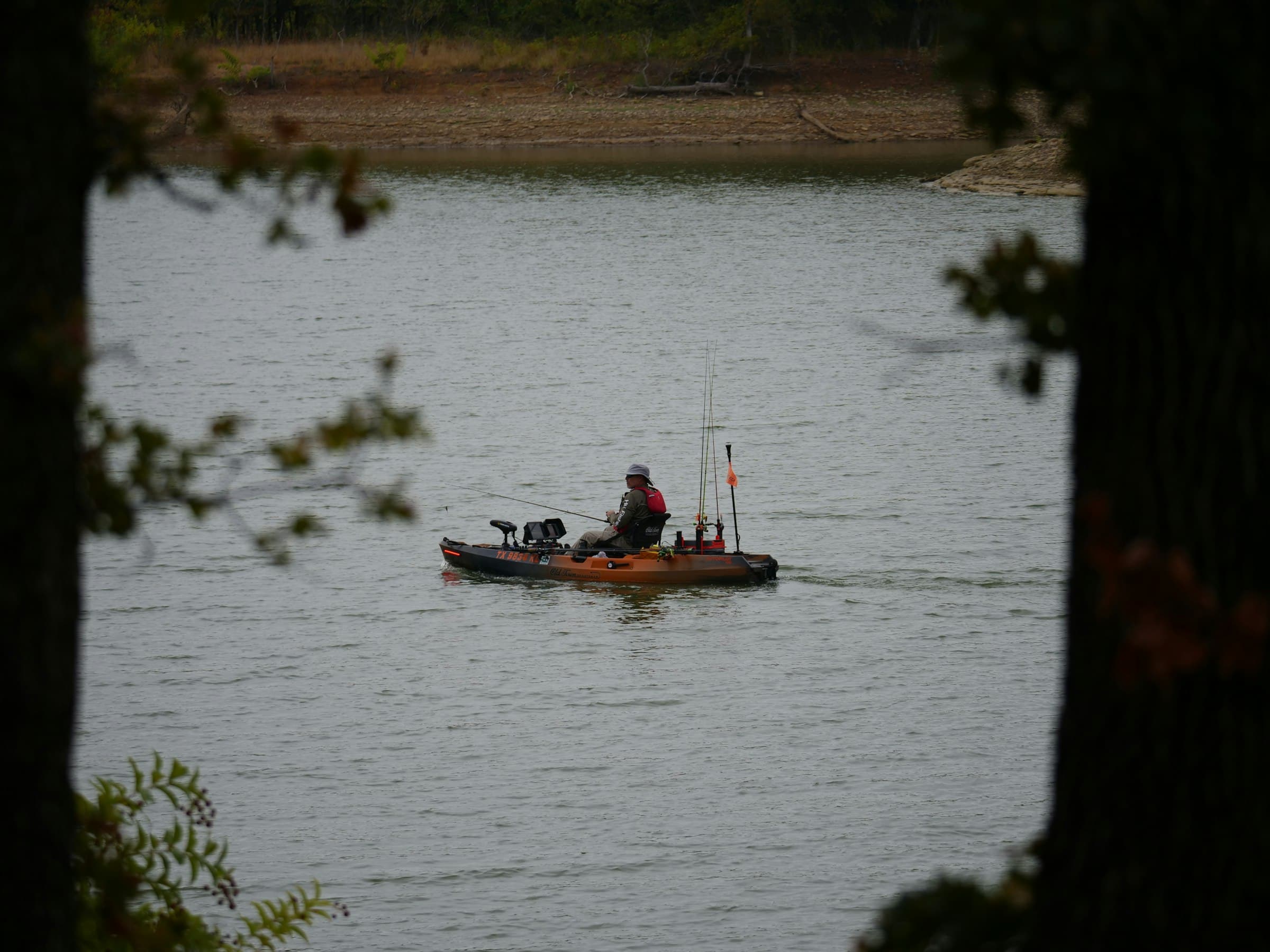
For most kayak anglers, the best fish finder battery is a 12V 10Ah lithium (LiFePO4) like the Dakota Lithium 12V 10Ah: it weighs under 3 lb and runs a typical 4–5 inch unit for a full day with plenty in reserve. If you run a 7-inch-plus unit with side imaging, or fish multi-day trips, step up to a 20Ah battery. If you only fish a few hours at a time, a budget 7Ah sealed lead-acid still works.
This guide is research-based. We compared manufacturer spec sheets and retailer listings for each battery, and the power-draw figures fish finder makers publish. We haven't used these batteries ourselves. The star ratings are our research scores, not test results.
Best Fish Finder Batteries for Kayaks: Quick Comparison
| Product | Our score | Price tier | Best for | Link |
|---|---|---|---|---|
| Dakota Lithium 12V 10Ah | 4.6/5 | $$ | Best overall: 2.77 lb, F2 terminals, 11-year warranty | Check price |
| ExpertPower EP1220 12V 20Ah | 4.4/5 | $$$ | Long days and bigger screens: 20Ah at 5 lb | Check price |
| Nocqua 10Ah Pro Power Kit | 4.2/5 | $$$ | Plug-and-play kit with charger and waterproof cable | Check price |
| Mighty Max ML7-12 (7.2Ah SLA) | 3.9/5 | $ | Budget: short trips with a low-draw unit | Check price |
- Dakota Lithium 12V 10Ah4.6/5
- Price tier
- $$
- Best for
- Best overall: 2.77 lb, F2 terminals, 11-year warranty
- ExpertPower EP1220 12V 20Ah4.4/5
- Price tier
- $$$
- Best for
- Long days and bigger screens: 20Ah at 5 lb
- Nocqua 10Ah Pro Power Kit4.2/5
- Price tier
- $$$
- Best for
- Plug-and-play kit with charger and waterproof cable
- Mighty Max ML7-12 (7.2Ah SLA)3.9/5
- Price tier
- $
- Best for
- Budget: short trips with a low-draw unit
Our score is our research rating, not an Amazon customer rating. Price tier compares the picks in this guide ($ lowest, $$$$ highest); check Amazon for the current price.
None of the batteries except the Nocqua kit include a charger.
How Big a Battery Does Your Fish Finder Need?
Runtime is roughly the battery's usable amp-hours divided by your fish finder's current draw. Fish finder makers publish the draw, so you can do the math before you buy.
Three examples from the manufacturers' spec pages:
- Humminbird PiranhaMAX 4 DI: 180 mA (0.18 A), per Humminbird
- Garmin Striker Vivid 4cv: 0.40 A typical, 1.5 A maximum, per the GPS Central spec listing
- Humminbird HELIX 7 MSI GPS G4N (7-inch, MEGA side imaging): 800 mA (0.8 A), per Humminbird
Usable capacity depends on chemistry. A common rule for sealed lead-acid (SLA/AGM) is to use only about half the rated capacity, because draining it deeply shortens its life. Lithium iron phosphate (LiFePO4) can use most of its rating; ExpertPower, for example, rates its EP1220 for 2,500 cycles at 100% depth of discharge.
On-paper runtime at the typical draw:
| Battery | Usable Ah (approx.) | PiranhaMAX 4 DI (0.18 A) | Striker Vivid 4cv (0.40 A) | HELIX 7 MSI (0.8 A) |
|---|---|---|---|---|
| 7.2Ah SLA | ~3.6 | ~20 h | ~9 h | ~4.5 h |
| 10Ah lithium | ~10 | ~55 h | ~25 h | ~12 h |
| 20Ah lithium | ~20 | ~110 h | ~50 h | ~25 h |
Real runtime is shorter. Screen brightness, cold weather, a GPS chart running, and an older battery all cut into it, and the Striker Vivid 4cv's listed maximum draw is nearly four times its typical figure. Plan on the table as a ceiling, not a promise.
The decision rule: a 4–5 inch unit runs a full day on a 10Ah lithium with a wide margin. A 7-inch side-imaging unit, or a second device like a GPS or light on the same battery, is where 20Ah starts to make sense.
#1 Best Overall: Dakota Lithium 12V 10Ah
The Dakota 12V 10Ah is the battery we'd put in most fishing kayaks. Dakota lists it at 2.77 lb and 5.94 × 2.55 × 3.78 inches, with standard F2 terminals (0.25 inch). That's about the footprint of a small 7Ah lead-acid battery, so it fits most kayak battery boxes and crates.
Dakota rates it for 2,000 cycles to 80% capacity, a 20 A max continuous discharge (far more than any fish finder needs) and an 11-year warranty. It has a built-in battery management system (BMS), which handles low-voltage cutoff and short-circuit protection.
Two things to know before you order. The charger isn't included: Dakota recommends a 12V 3A LiFePO4 charger, sold separately. And don't charge it below 32°F; Dakota lists a charging range of 32–113°F. Retailer listings give slightly different operating ranges, so we've used Dakota's own, the narrower one: −4°F to 140°F for use.
Pros
- Under 3 lb with the footprint of a small SLA
- Standard F2 terminals fit most fish finder power leads
- 11-year warranty and a 2,000-cycle rating
- Built-in BMS
Cons
- Charger sold separately
- No charging below 32°F
- 10Ah is tight for 7-inch side-imaging units on long days
#2 Best for Long Days and Bigger Screens: ExpertPower EP1220 12V 20Ah
The EP1220 doubles the capacity for about 2 lb more. ExpertPower lists 20Ah, 5 lb, and 7.1 × 3.03 × 6.6 inches, with a 20 A max continuous discharge and a 2-year warranty. It's the pick if you run a 7-inch side-imaging unit, fish dawn to dusk, or want one battery for a weekend without recharging.
Check the terminals before you order: ExpertPower lists F13/M5 bolt terminals, not the push-on F1/F2 tabs on most small batteries. You'll need ring terminals on your fish finder's power lead. The battery is also taller than the 10Ah options at 6.6 inches, so measure your battery box or crate.
Like the Dakota, it has a BMS and can't be charged below freezing; ExpertPower lists a 32–140°F charging range and −4°F to 140°F for discharge. No charger is included; ExpertPower says it works with 12V 2A or 5A smart LiFePO4 chargers.
Pros
- 20Ah for 5 lb
- Enough for a 7-inch side-imaging unit plus accessories
- Rated for 2,500 cycles at 100% depth of discharge
Cons
- Bolt terminals: needs ring connectors
- 6.6 inches tall; may not fit small battery boxes
- Charger sold separately; 2-year warranty
#3 Best Plug-and-Play Kit: Nocqua 10Ah Pro Power Kit
The Nocqua kit is for anglers who don't want to source a box, charger and connectors separately. Retailer listings describe a 12V 10Ah lithium-ion battery in a silicone case with a ballistic nylon sleeve and a water-tight connection port. The kit includes a wall charger, a universal power cable with a waterproof connector and open leads, two heat-shrink marine butt connectors and heat-shrink tubing.
You splice the fish finder's power lead to the kit's cable once, and from then on you just unplug the battery to charge it. That's simpler than mounting a bare battery in a box with exposed terminals.
The listings disagree on details, so we've kept to what they share. Boonedox (the US seller for Nocqua) lists a 2A charger; one paddle shop lists a 5A charger. Neither of the two main listings we checked gives a weight, and a third gives 3 lb, which may be the shipping weight. Note the chemistry too: this is lithium-ion, not LiFePO4 like the Dakota and ExpertPower. The warranty is 12 months, the shortest here.
Pros
- Charger, waterproof cable and connectors included
- Water-resistant case and connection port
- No battery box needed
Cons
- Costs more than a bare 10Ah LiFePO4 battery
- 12-month warranty
- Listings disagree on charger rating and weight
#4 Best Budget: Mighty Max ML7-12 (12V 7.2Ah SLA)
If you fish a few hours at a time with a low-draw unit, a sealed lead-acid battery still does the job for the lowest price here. Mighty Max lists the ML7-12 at 12V 7.2Ah, 4.5 lb, 5.90 × 2.50 × 3.90 inches, with F1 terminals (0.187 inch) and sealed, valve-regulated AGM construction that needs no maintenance.
Using the half-capacity rule, that's about 3.6 usable amp-hours: roughly 9 hours on paper for a Striker Vivid 4cv, or 20 hours for a PiranhaMAX 4 DI. That's enough for a morning or a full day with a small unit, but not for a 7-inch side-imaging screen.
The trade-offs are weight (about 1.7 lb more than the Dakota for less usable capacity), a 1-year warranty, and a shorter life if you drain it deeply. Note the F1 terminals are narrower than F2, so check the connectors on your power lead. You also need a charger made for SLA/AGM batteries; a lithium charger isn't the right match.
Pros
- Lowest price of the four
- Fits the same space as a 10Ah lithium
- Sealed and maintenance-free
Cons
- Only about half the 7.2Ah is usable
- Heavier than lithium for less runtime
- F1 terminals; 1-year warranty
Lithium vs SLA for a Kayak Fish Finder
Lithium (LiFePO4) wins on a kayak unless the budget is the only thing that matters. Here's how the picks above compare on the specs that matter:
| Dakota 10Ah LiFePO4 | Mighty Max 7.2Ah SLA | |
|---|---|---|
| Weight | 2.77 lb | 4.5 lb |
| Usable capacity | ~10Ah | ~3.6Ah (half of rating) |
| Warranty | 11 years | 1 year |
| Price tier | $$ | $ |
| Charger | LiFePO4 charger | SLA/AGM charger |
Choose SLA if you fish short sessions with a low-draw unit and want to spend as little as possible. Choose lithium if you fish all day, care about weight in the hull, or want a battery that lasts many seasons.
Chargers, Terminals and Fuses
Match the charger to the chemistry. LiFePO4 batteries need a LiFePO4 charger; SLA/AGM batteries need an SLA/AGM charger. Of the picks here, only the Nocqua kit includes one.
Check the terminal type. Fish finder power leads usually end in bare wire or connectors you add yourself. Match them to the battery:
- F1 (0.187 inch push-on tab): Mighty Max ML7-12
- F2 (0.25 inch push-on tab): Dakota Lithium 10Ah
- Bolt terminal (F13/M5): ExpertPower EP1220, which needs ring terminals
- Cable with a waterproof connector: Nocqua kit
Fuse it. Put an inline fuse on the positive lead close to the battery, sized to what your fish finder's manual specifies. It protects the unit and the wiring if a connection shorts in a wet hull.
Keep the connection dry. The battery terminals are the weak point on a kayak. A sealed battery box, or a battery in a dry bag in the hull or a crate, keeps spray off them. Our kayak rigging guide covers where to put the battery and how to route the cable.
Using a Kayak Fish Finder Battery on the Ice
The same 12V battery runs your fish finder on the ice, with one catch: lithium batteries can't be charged below freezing. Dakota and ExpertPower both list 32°F as the minimum charging temperature. Charge indoors, keep the battery insulated while you fish, and let a cold battery warm up before you plug it in. Our guide on using a regular fish finder for ice fishing covers which ice kits fit which units and which ones include a battery.
Frequently Asked Questions
How long will a 7Ah battery run a fish finder?
On a sealed lead-acid 7Ah battery, plan on about half the rating: around 3.5 usable amp-hours. That's about 9 hours for a unit drawing 0.40 A, like the Garmin Striker Vivid 4cv, and about 20 hours for a 0.18 A unit like the Humminbird PiranhaMAX 4 DI, on paper. A 7Ah lithium battery runs roughly twice as long.
Is a 10Ah lithium battery enough for a kayak fish finder?
For a 4–5 inch unit, yes, with a wide margin. For a 7-inch side-imaging unit drawing around 0.8 A it gives roughly 12 hours on paper, so a 20Ah battery is the safer pick for long days or if you add a GPS or lights.
Can I use my trolling motor battery for the fish finder?
Yes, if your kayak already carries one. Run a fused lead to the battery. The case for a separate small battery is that the trolling motor can't then drain the power your sonar depends on.
Do I need a special charger for a lithium fish finder battery?
Yes. Use a charger made for LiFePO4 batteries; Dakota recommends a 12V 3A LiFePO4 charger for its 10Ah battery, and ExpertPower lists 2A or 5A LiFePO4 chargers for the EP1220. An SLA charger isn't designed for lithium charging profiles.
What size battery for a fish finder with side imaging?
Check the unit's current draw. Humminbird lists 800 mA for the HELIX 7 MSI GPS G4N. A 20Ah lithium battery covers that for a full day with margin; a 10Ah works for shorter trips.
The Bottom Line
Buy the Dakota Lithium 12V 10Ah for a typical 4–5 inch kayak fish finder: it's light, uses the common F2 terminals and covers a full day easily. Step up to the ExpertPower EP1220 20Ah for a 7-inch side-imaging unit or multi-day trips, and plan for its bolt terminals. Get the Nocqua 10Ah kit if you want the charger, waterproof cable and connectors in one box. Choose the Mighty Max ML7-12 only for short trips on a tight budget. Still picking the fish finder itself? Start with our guide to choosing a fish finder or our best fish finders for kayaks.
Keep reading
Best Fish Finder for Pontoon Boat: 4 Picks That Reach the Helm
The best fish finder for a pontoon boat, matched to a 20-foot transducer cable run, a mount on the pontoon log and a helm-sized screen. 4 picks compared.
Best Fish Finder for Jon Boat: 5 Units That Fit a Small Aluminum Hull
The best fish finder for a jon boat, matched to how you'll mount the transducer on an aluminum transom, power it, and read it from the tiller. 5 picks across budgets.
Can You Use a Regular Fish Finder for Ice Fishing? (Kayak Units Too)
Yes. A regular or kayak fish finder works on the ice with an ice transducer and a battery. Here's which ice kit fits Garmin, Humminbird, Lowrance and Deeper units.